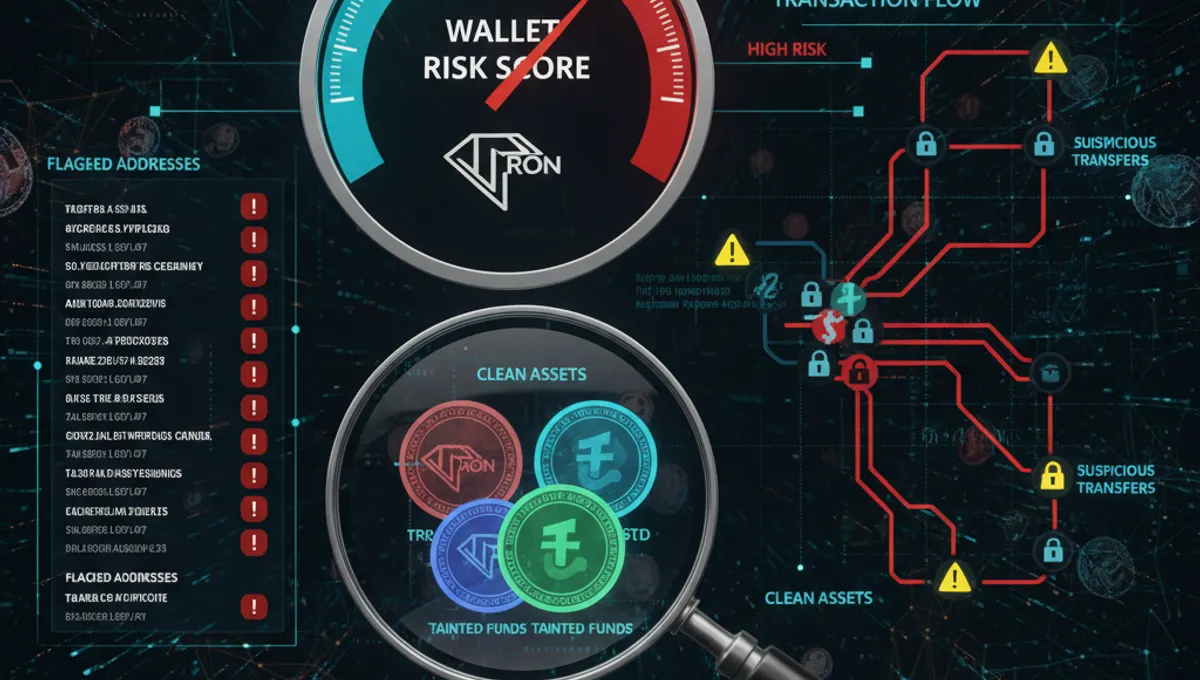
What Does It Mean to Check a Crypto Wallet
Checking a crypto wallet means examining its on-chain activity to identify risk factors. This includes tracing where funds originated, whether they passed through high-risk services like mixers, and whether the wallet or its counterparties appear on sanctions lists. A crypto wallet AML check reveals the wallet's transaction patterns, balance, and exposure to illicit activity. Unlike a simple balance lookup, a proper wallet screening combines blockchain data with compliance intelligence to assign a risk score. The goal is to determine whether receiving funds from that wallet poses regulatory or financial risk to you or your exchange.
Why AML Check Crypto Wallet Before Receiving Funds
Exchanges and custodians freeze accounts and transactions tied to tainted coins to comply with anti-money laundering regulations. If you deposit USDT or TRX flagged as dirty crypto, your account may be locked pending investigation, or the transaction reversed entirely. Sanctions screening is mandatory in most jurisdictions; receiving funds from a sanctioned entity can expose you to legal liability. Darknet market proceeds, stolen funds, and mixer outputs are common red flags. By running an AML crypto wallet check before accepting a transfer, you avoid downstream compliance problems. This is especially critical for merchants, exchanges, and high-volume traders who face stricter monitoring.
How to Check Crypto Wallet Balance and Risk Score
Step-by-step process:
- Obtain the wallet address (a string of characters unique to each blockchain—Tron, Ethereum, Bitcoin, etc.).
- Visit a trusted AML screening service or blockchain explorer.
- Paste the address into the search field.
- Review the wallet's transaction history, including inbound and outbound transfers.
- Check for risk indicators: mixer usage, darknet market exposure, sanctions list matches, or scam associations.
- Note the assigned risk score (typically low, medium, or high).
- Examine the wallet's age, transaction frequency, and counterparty addresses.
The AML check crypto wallet process returns a risk profile summarizing these factors. A low-risk wallet shows clean, traceable transaction history with no illicit associations. Medium-risk wallets may have minor red flags or unclear provenance. High-risk wallets show direct or indirect links to theft, sanctions, or illegal markets.
Understanding Crypto Wallet Risk Score Levels
Risk scores quantify the likelihood that a wallet is associated with illicit activity or compliance violations. Most services use a scale from 0 to 100 or low/medium/high categories.
Low Risk (0–30): Clean transaction history, no sanctions matches, no mixer exposure. Safe to receive funds from.
Medium Risk (31–70): Some exposure to high-risk services, unclear transaction origins, or minor sanctions list flags. Requires manual review before acceptance.
High Risk (71–100): Direct links to darknet markets, theft, sanctions entities, or heavy mixer usage. Funds should be rejected or escalated to compliance.
Acceptable thresholds vary by jurisdiction and business model. Exchanges typically reject anything above 50; merchants may accept up to 40. Your compliance team should define your organization's policy based on regulatory requirements and risk appetite.
Common Red Flags in Crypto Wallet Screening
High-risk indicators include:
- Mixer usage: Funds routed through privacy mixers suggest intentional obfuscation.
- Darknet market exposure: Direct or recent transfers to known illegal marketplace addresses.
- Sanctions list matches: Wallet address or associated entity appears on OFAC, EU, or UN sanctions lists.
- Stolen funds: Wallet linked to theft, hacking, or fraud incidents documented on-chain.
- Rapid movement: Funds transferred multiple times in short intervals, typical of money laundering.
- Scam association: Address flagged by community reports or blockchain security firms as part of a scam.
- Gambling platforms: Some jurisdictions treat gambling-linked funds as higher risk.
- Unregistered exchange transfers: Funds from unregulated or delisted exchanges.
None of these flags alone is conclusive; context matters. A single mixer transaction doesn't make a wallet permanently dirty, but a pattern of mixer use combined with sanctions exposure is a strong rejection signal.
How to Avoid Receiving Tainted Coins and Frozen USDT
Best practices:
- Screen before accepting: Run an AML check crypto wallet check on any large or unfamiliar transfer before confirming receipt.
- Use verified services: Check wallets through trusted AML screening services listed on our curated AML Services page—they combine blockchain data with compliance databases for accuracy.
- Set internal thresholds: Define your organization's acceptable risk score ceiling and enforce it consistently.
- Document decisions: Keep records of wallet checks and risk assessments for audit trails.
- Monitor post-receipt: Even after accepting funds, monitor the wallet for new high-risk activity.
- Educate counterparties: Ask senders to provide wallet provenance or attestations of fund legitimacy.
- Escalate edge cases: When a wallet score is borderline, involve your compliance team before proceeding.
Frozen USDT and account bans occur when exchanges detect tainted coins post-deposit. Prevention through pre-screening is far cheaper than remediation.
Comparing AML Wallet Check Services
Several approaches exist to check a crypto wallet:
Public Blockchain Explorers: Free tools like Etherscan or Tronscan show transaction history but lack AML scoring and sanctions matching. Useful for basic due diligence but insufficient for compliance.
Dedicated AML Screening Platforms: Specialized services integrate blockchain data with sanctions lists, theft databases, and mixer detection. They assign risk scores and provide detailed reports. Most charge per lookup or subscription.
Exchange Built-in Screening: Some exchanges screen deposits automatically but don't expose the full risk report to users.
Blockchain Analytics Firms: Enterprise-grade providers offer deep forensics, transaction tracing, and custom risk models. Higher cost but comprehensive.
For most users and small businesses, a mid-tier dedicated AML service strikes the right balance between cost, accuracy, and ease of use. Our AML Services page curates verified providers that offer transparent pricing and reliable screening for TRX, USDT, BTC, and ETH wallets.
Frequently asked questions
Can I check a crypto wallet balance without an AML service
Yes, public blockchain explorers like Etherscan show wallet balances and transaction history for free. However, they don't provide AML risk scores, sanctions matching, or tainted coin detection. For compliance purposes, you need a dedicated AML check crypto wallet service that combines blockchain data with sanctions and theft databases.
What happens if I receive USDT from a high-risk wallet
Your exchange may freeze the deposit pending investigation, reverse the transaction, or flag your account for compliance review. If the funds are linked to sanctions or theft, you could face legal liability. This is why screening before accepting transfers is critical—it prevents frozen USDT and account bans downstream.
How long does a crypto wallet AML check take
Most dedicated AML services return results within seconds to minutes. Public blockchain explorers are instant but lack compliance data. Enterprise forensics may take hours or days for deep analysis. For routine wallet screening, expect results in under a minute from a mid-tier service.
Is a low AML risk score a guarantee the wallet is clean
A low risk score indicates no detected red flags, but it's not absolute proof of legitimacy. New wallets or those with minimal history may score low simply due to lack of data. Always combine risk scores with other due diligence, such as verifying the sender's identity and transaction context.
Can I check a Tron TRX or Bitcoin BTC wallet the same way
Yes, the process is identical: obtain the address, paste it into an AML screening service, and review the risk score and transaction history. Most modern AML services support multiple blockchains including Tron, Ethereum, Bitcoin, and others. Ensure your chosen service covers the blockchain you're screening.