What Is an AML Crypto Check and Why It Matters
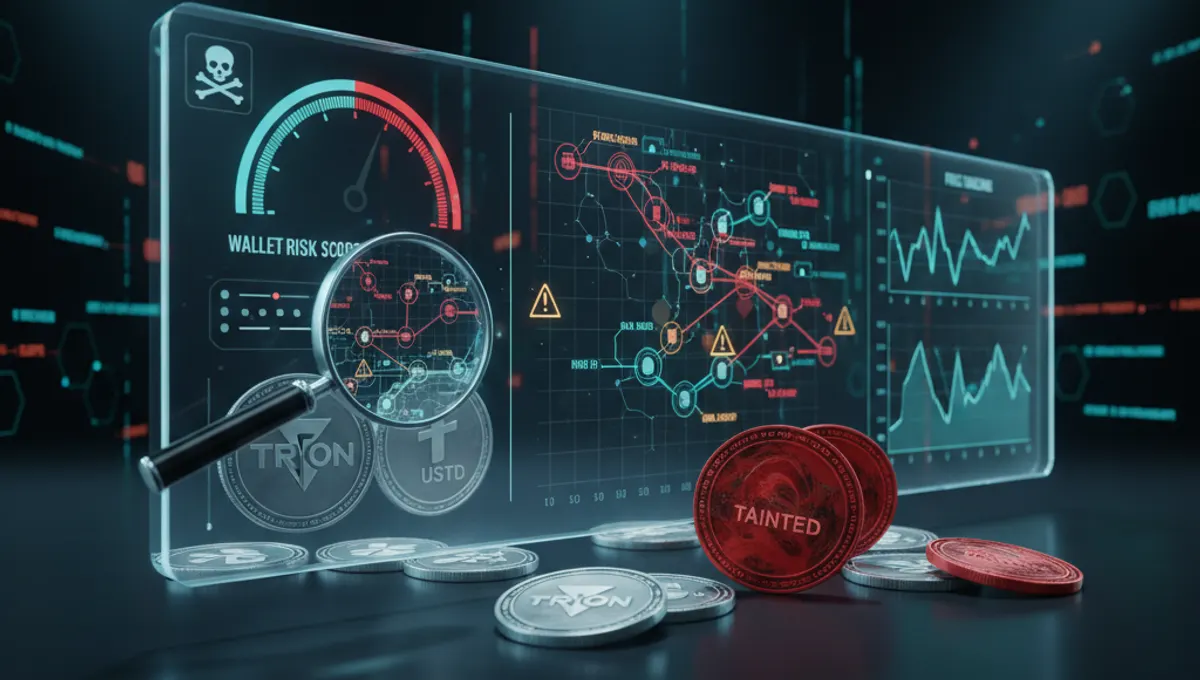
An AML crypto check scans a blockchain address against known risk indicators: mixer exposure, darknet market links, stolen fund histories, and sanctioned entity lists. When you receive USDT on Tron, Bitcoin, or Ethereum, that coin carries a transaction history. If it passed through a mixer, a ransomware wallet, or a sanctioned address, exchanges may flag or freeze it upon deposit. A free AML crypto check reveals these risks before the coin reaches your account. Risk scoring ranges from clean (0–20) to high-risk (70–100), depending on the service. Knowing the risk score of an incoming transfer protects your exchange account from sudden freezes and compliance holds.
How Free AML Crypto Wallet Check Services Work
Free AML screening tools analyze on-chain data to assign a risk score to any wallet address. The process involves:
- you enter a TRX, USDT, BTC, or ETH address;
- the service queries blockchain records and cross-references sanctions lists, known theft databases, and mixer patterns;
- a risk score is returned within seconds, often with a brief summary of flagged activity. Most free tiers show basic risk levels (clean, low, medium, high) without detailed transaction breakdowns. Paid plans unlock full transaction histories, entity identification, and ongoing monitoring. Free checks are sufficient for one-off wallet screening before a single transfer. For ongoing compliance or business use, paid services provide deeper analysis and reporting.
Step-by-Step: How to Check a Crypto Wallet Before Receiving USDT or TRX
Follow these steps to perform a free AML crypto check on any address:
- Obtain the wallet address you plan to receive funds from (copy the full address, including checksum if applicable).
- Visit a free AML screening service listed on our curated AML Services page to ensure you're using a trusted provider.
- Paste the address into the search field and select the blockchain (Tron for TRX/USDT TRC20, Bitcoin for BTC, Ethereum for ETH).
- Click "Check" or "Scan" and wait for the risk score to load (typically 5–15 seconds).
- Review the risk rating: green/clean (0–20), yellow/low (20–40), orange/medium (40–70), or red/high (70–100).
- If the score is green or low, the wallet is likely safe to receive from. If medium or high, ask the sender for an alternative address or decline the transfer.
- Document the result for your records, especially if you're managing business transactions.
Understanding Risk Score Levels and What They Mean
Risk scores quantify the likelihood that a wallet has been involved in illicit activity or holds tainted coins. Here's what each range typically indicates:
- Clean (0–20): No known exposure to mixers, darknet markets, or stolen funds. Safe to receive.
- Low (20–40): Minor red flags, such as interaction with a gambling platform or low-volume mixer use. Generally acceptable; assess context.
- Medium (40–70): Moderate risk, often from multiple mixer interactions, scam associations, or unconfirmed theft links. Proceed with caution; verify the sender's legitimacy.
- High (70–100): Severe risk, including direct ransomware links, sanctioned entity involvement, or confirmed stolen funds. Do not receive; report to your exchange if already deposited.
Acceptable thresholds vary by use case. Personal users typically accept scores below 40. Businesses and exchanges enforce stricter limits, often rejecting anything above 20–30. Your exchange may also freeze deposits above a certain threshold automatically.
Free vs. Paid AML Crypto Check Services: What's the Difference
Free AML crypto checks provide basic risk scoring and category flags (mixer, darknet, sanctions). They answer the core question: is this wallet risky? Paid services add:
- Full transaction history and entity identification (who owns the wallet).
- Detailed risk breakdown by category (e.g., 40% mixer exposure, 20% darknet, 10% sanctions).
- Ongoing monitoring and alerts if a wallet's risk score changes.
- Batch screening for multiple addresses.
- Compliance reports suitable for regulatory audits.
- Priority support and custom thresholds.
For a one-time check before receiving a single transfer, free screening is sufficient. If you're running a business, managing a trading desk, or need to justify compliance decisions to regulators, paid plans are worth the cost. Our AML Services page lists verified providers offering both free trials and transparent pricing so you can compare options.
What to Do If Your Coins Are Flagged as Dirty or High-Risk
If you receive USDT, TRX, or BTC flagged as high-risk or tainted, your options are limited. Exchanges scan deposits automatically and may freeze your account or the funds pending review. Here's what to do:
- Do not attempt to move the coins through a mixer or exchange to obscure their history; this is illegal in most jurisdictions and will trigger compliance alerts.
- Contact your exchange's support team immediately with the transaction ID and explain the source (if legitimate). Provide proof that the sender is a known, trusted party.
- If the coins are confirmed stolen or linked to sanctions, the exchange will likely hold or return them. Cooperate fully.
- For future transfers, use a free AML crypto check beforehand to avoid receiving flagged coins in the first place.
- If you're a business, document the incident and update your AML procedures to screen all incoming addresses.
Prevention is far easier than remediation. Always check a wallet before accepting a large transfer.
How Exchanges Freeze USDT and Crypto Accounts Due to AML Flags
Exchanges use automated AML screening to monitor deposits in real-time. When a deposit arrives, the exchange checks the sending address against its internal risk database and third-party AML services. If the address scores above the exchange's threshold (often 30–50), the deposit is flagged. The exchange may:
- Hold the funds pending manual review (24–72 hours).
- Freeze your account temporarily while compliance investigates.
- Require you to provide proof of the transfer's legitimacy (invoice, contract, etc.).
- Return the funds to the sender if they cannot be cleared.
- Permanently ban your account if the coins are linked to sanctions or major theft.
USDT on Tron (TRC20) is particularly sensitive because Tron's lower barriers to entry attract more illicit activity. Bitcoin and Ethereum deposits face similar scrutiny. The best defense is to screen wallets before receiving. Use a free AML crypto check on any address before accepting funds, and recommend the same to your business partners.
Frequently asked questions
Is there a completely free AML crypto check tool with no limits?
Most free AML crypto checks allow 1–5 scans per day without signup. Full-featured free trials typically expire after 7–14 days. For unlimited free checks, you'll need to use multiple services or accept basic risk categorization without detailed breakdowns. Paid plans start at $10–50 monthly for business use.
Can I check a crypto wallet on Telegram for free?
Some AML services offer Telegram bots that perform free wallet checks via chat. Search for AML check bots in Telegram, but verify the bot's legitimacy first—use only official bots from recognized providers listed on our AML Services page. Never share private keys or seed phrases with any bot.
What risk score is acceptable for receiving USDT or TRX?
Personal users typically accept scores below 40 (low risk). Businesses and exchanges enforce stricter thresholds, often rejecting scores above 20–30. Your exchange may auto-freeze deposits above its internal threshold. Always check the sender's address beforehand to avoid frozen funds and account holds.
How long does a free AML crypto check take?
Most free AML checks complete in 5–15 seconds. Results depend on blockchain network load and the service's server capacity. If a check takes longer than 30 seconds, try again or use an alternative service. Batch checks (multiple addresses) may take 1–5 minutes.
What happens if I receive coins flagged as high-risk?
Your exchange will likely freeze the deposit and your account pending review. Cooperate with support and provide proof of the transfer's legitimacy if possible. If the coins are confirmed stolen or sanctioned, they will be returned or held indefinitely. Always screen wallets before accepting transfers to prevent this.