What Is an AML Crypto Check and Why Use It on Telegram?
An AML crypto check screens a blockchain address against sanctions lists, known theft databases, and darknet market activity. AML stands for anti-money laundering; the check returns a risk score that tells you whether coins tied to that address are likely to be flagged by exchanges or frozen by regulators. Telegram bots and channels offer free AML crypto checks because they integrate with public blockchain data and compliance APIs. Using Telegram makes the process frictionless: you paste an address, get a result in seconds, and decide whether to proceed with a transaction. This is especially useful for receiving USDT (Tether on TRC20), TRX (Tron), or BTC before depositing into an exchange, since exchanges perform their own AML checks and may reject or freeze deposits tied to high-risk addresses.
How Does AML Risk Scoring Work for Crypto Wallets?
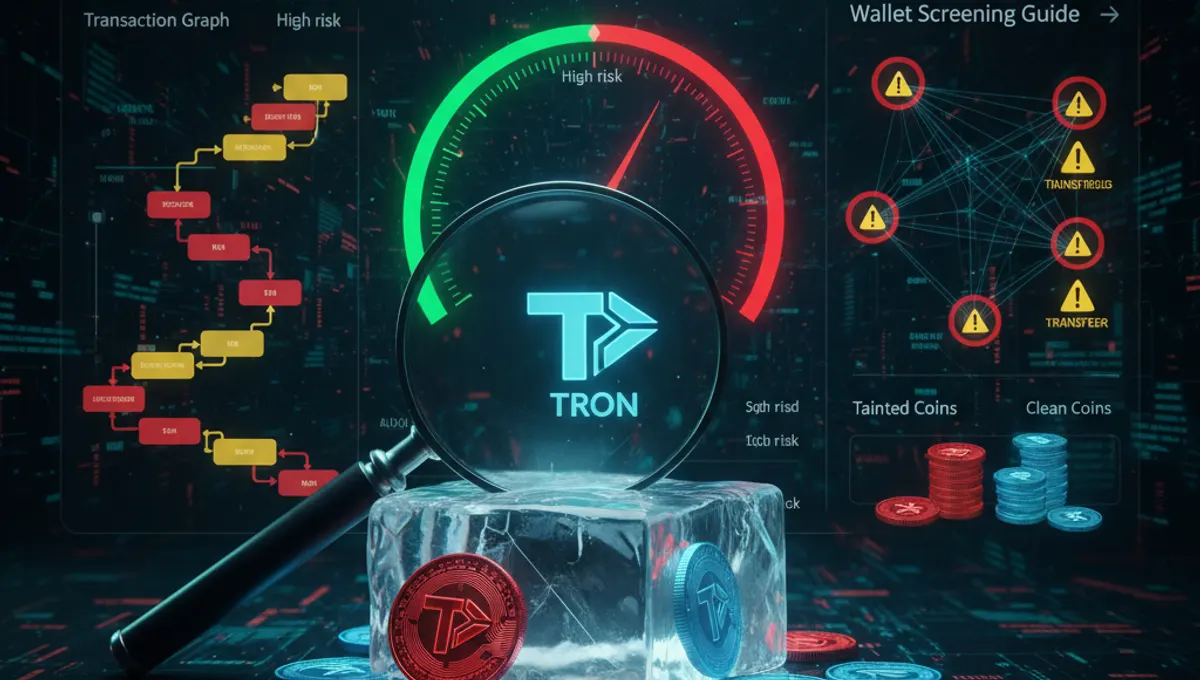
Risk scores are calculated by analyzing an address's transaction history, clustering it with known bad actors, and cross-referencing it against public sanctions lists and theft reports. A score typically ranges from 0 (clean) to 100 (high risk). Here's how the scoring breaks down:
- Low risk (0–20): Address has no known connection to sanctions, theft, or darknet markets.
- Medium risk (21–50): Address has some exposure to mixers or unverified sources, but no direct sanctions or theft flags.
- High risk (51–100): Address is linked to stolen funds, sanctioned entities, darknet markets, or gambling platforms.
Blockchain analytics firms track address clusters by analyzing transaction patterns, timing, and known entity behavior. When you run a free AML crypto check on Telegram, the bot queries these databases and returns the score. The check also flags specific risk categories: sanctions (OFAC lists), theft (stolen exchange funds or ransomware), mixers (privacy-enhancing services), darknet markets, and scams. A single high-risk flag does not always mean the coins are unusable, but it signals that an exchange is more likely to freeze the deposit or request additional documentation.
Step-by-Step: How to Run a Free AML Crypto Check on Telegram
To perform a free AML crypto check on Telegram, follow these steps:
- Open Telegram and search for AML screening bots or channels that offer wallet checks. Many compliance-focused channels publish free screening tools or link to verified services.
- Copy the wallet address you want to check (USDT TRC20, TRX, BTC, or ETH).
- Paste the address into the bot or follow the channel's instructions (some require you to reply to a message or use a specific command).
- Wait for the result, typically returned within 5–30 seconds.
- Review the risk score and any flags (sanctions, theft, mixer, darknet, gambling).
- If the score is low (0–20), the coins are generally safe to receive or deposit.
- If the score is medium (21–50), consider asking the sender for clarification or requesting additional documentation before accepting.
- If the score is high (51–100), do not accept the transfer; contact the sender or your exchange support.
Many Telegram bots also let you check multiple addresses in batch or set up alerts for specific wallets. Always verify that the bot or channel is legitimate by checking its member count, posting history, and whether it links to a known compliance service. For the most reliable free AML crypto checks, refer to our curated list of verified AML services on this site—these are the safest starting point for screening wallets before any transaction.
What Risk Score Levels Mean for Your Crypto Transactions
Understanding risk score thresholds helps you decide whether to proceed with a transaction or flag it for review.
Scores 0–15 (Very Low): Address is clean. No sanctions, theft, or darknet exposure. Safe to receive and deposit at most exchanges without additional scrutiny.
Scores 16–30 (Low): Address has minimal risk. May have received funds from a mixer or unverified source, but no direct red flags. Most exchanges will accept deposits without delay.
Scores 31–50 (Medium): Address shows some exposure to higher-risk activity. Exchanges may accept the deposit but could request proof of source or additional KYC documentation. Proceed with caution.
Scores 51–75 (High): Address is linked to known theft, sanctions, or darknet markets. Exchanges are likely to freeze the deposit and request investigation. Do not accept unless you can verify the source.
Scores 76–100 (Critical): Address is directly connected to sanctions lists, ransomware, or major theft. Exchanges will almost certainly freeze the deposit and may report it to authorities. Reject the transfer immediately.
These thresholds are general guidelines; individual exchanges may have stricter or more lenient policies. Always check your exchange's AML policy before depositing high-risk coins.
Common Risk Flags: Mixers, Darknet, Theft, and Sanctions
When you run a free AML crypto check on Telegram, the result may include specific risk flags that explain why a score is elevated. Understanding these flags helps you assess whether the risk is acceptable.
Mixer Flag: Address has received funds from or sent funds to a privacy mixer. Mixers combine crypto from multiple sources to obscure transaction trails. Exchanges view mixer activity as suspicious because it suggests an attempt to hide the source of funds. A mixer flag alone does not mean the coins are stolen, but it raises compliance concerns.
Darknet Flag: Address is linked to known darknet markets (e.g., illegal marketplaces). This is a critical red flag; most exchanges will freeze deposits immediately.
Theft Flag: Address received stolen funds from a known exchange hack, ransomware attack, or scam. Do not accept coins with this flag.
Sanctions Flag: Address is tied to a sanctioned entity or jurisdiction (e.g., OFAC lists). Accepting or depositing these coins may violate law. Reject immediately.
Gambling Flag: Address is associated with gambling platforms. Some exchanges accept gambling-linked coins, but others do not. Check your exchange's policy.
Scam Flag: Address is linked to a known scam or Ponzi scheme. Reject.
If you see any of these flags, ask the sender for clarification or decline the transaction. For detailed screening, consult the verified AML services listed on our AML Services page.
What to Do If Your Crypto Address Is Flagged as High Risk
If you run a free AML crypto check and your own address is flagged as high risk, or if you receive coins that are flagged, take these steps:
- Investigate the source: Review your recent transactions to identify which address or transaction caused the flag. If you received coins from an exchange or trusted source, contact them for clarification.
- Request documentation: If the flag is due to a legitimate transaction (e.g., you received a payment from a business that uses a mixer for privacy), ask the sender for proof of source or a signed statement.
- Contact your exchange: Before depositing flagged coins, inform your exchange support and provide context. Some exchanges will accept coins with medium-risk flags if you can explain the source.
- Do not attempt to hide the flag: Sending flagged coins through multiple wallets or mixers will only increase the risk score and may trigger regulatory scrutiny.
- Consider consolidation: If only part of your balance is flagged, you may be able to move clean coins to a new address and leave flagged coins untouched.
- Consult compliance: For large amounts or complex situations, consult a blockchain compliance specialist or lawyer familiar with crypto regulations in your jurisdiction.
Exchanges freeze USDT and other coins when they detect high-risk activity, and account bans can follow if you attempt to deposit flagged funds. Prevention is easier than remediation.
Free vs. Paid AML Crypto Checks: What's the Difference?
Free AML crypto checks on Telegram and other platforms offer basic risk scoring and flag detection, but paid services provide deeper analysis and faster support.
Free Checks: Return a risk score and basic flags (sanctions, theft, mixer, darknet). Results are typically accurate for common risk categories. Suitable for routine wallet screening before receiving payments. May have rate limits (e.g., 5–10 checks per day).
Paid Checks: Offer detailed transaction history analysis, cluster mapping, and custom risk thresholds. Include priority support and API access for businesses. Provide compliance reports suitable for regulatory audits. Faster processing and more granular risk categories.
For individual users, free AML crypto checks are sufficient for most transactions. For businesses or high-volume traders, paid services are worth the investment. Our curated list of verified AML services on this site includes both free and paid options; start there to find a tool that matches your needs and budget.
Frequently asked questions
Is a free AML crypto check on Telegram accurate?
Free checks are accurate for detecting major risk flags like sanctions and known theft. They query the same public blockchain data and compliance databases as paid services. However, free checks may have lower update frequency and fewer custom risk categories. For routine screening, they are reliable; for complex compliance needs, paid services offer more detail.
What happens if I receive USDT with a high AML risk score?
If you deposit high-risk USDT at an exchange, the deposit may be frozen pending investigation. Your account could be temporarily restricted or permanently banned if the exchange determines the coins are linked to sanctions or theft. Do not attempt to hide the flag by moving coins through multiple wallets; this increases scrutiny. Contact your exchange support immediately if a deposit is frozen.
Can I use a free AML crypto check to verify a TRX address before sending?
Yes. Paste the TRX address into a free AML check tool on Telegram or a verified service, and you'll receive a risk score within seconds. If the score is low (0–20), the address is safe. If it's high (51–100), do not send; contact the recipient to confirm the address is correct or ask why it's flagged.
Do all exchanges use the same AML risk thresholds?
No. Each exchange sets its own AML policy and risk tolerance. Some accept medium-risk coins (21–50) if you provide documentation; others reject any score above 30. Check your exchange's AML policy or contact support before depositing flagged coins. This varies by jurisdiction and exchange.
How often should I run an AML crypto check on my wallet?
Run a check before receiving large payments or depositing coins at an exchange. If you hold coins long-term, re-check every 3–6 months, as risk scores can change if new transaction data emerges. For routine transactions, a single check before deposit is usually sufficient.