What Is an AML Locator and Why You Need One
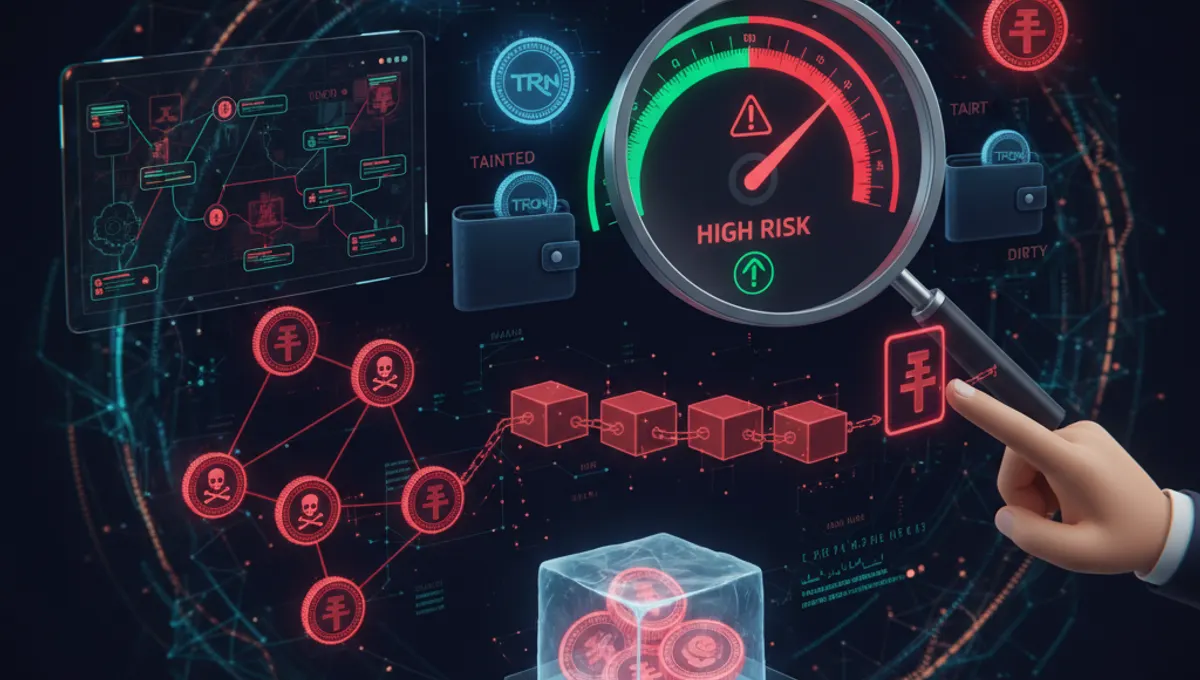
An AML locator is software that cross-references a blockchain address against known risk indicators: sanctions lists, darknet market wallets, scam proceeds, stolen cryptocurrency, and mixer services. When you input a TRX, USDT, or BTC address, the tool returns a risk score and a breakdown of any flagged activity in the address history.
Exchanges and custodians use AML locators to comply with anti-money laundering regulations. If you receive coins flagged as high-risk, your exchange account may be frozen pending investigation, and you may lose access to your funds. A preemptive AML check before accepting a large transfer protects you from this scenario. The process typically takes seconds to minutes and provides immediate results.
How AML Check Process Works: Step-by-Step
- Enter the wallet address (TRX, USDT, BTC, or ETH) into the AML locator interface.
- The tool queries blockchain data and cross-references the address against multiple risk databases.
- Within seconds to a few minutes, you receive a risk score (often color-coded: green for low, yellow for medium, red for high).
- The report shows transaction history, linked entities, and specific risk flags (e.g., "linked to mixer service" or "flagged on sanctions list").
- You review the findings and decide whether to proceed with the transaction.
The AML check process is non-invasive; it does not require the wallet owner's consent or knowledge. You can check any public address on the blockchain. Most services store reports for compliance audit trails, which is useful if you later need to prove due diligence.
AML Check Requirements and What Risk Scores Mean
Risk scores typically range from 0 to 100 or are labeled as low, medium, or high. A score below 20 usually indicates minimal risk; 20–50 suggests moderate caution; above 50 flags serious concerns.
AML check requirements vary by jurisdiction and institution. Regulated exchanges often require a risk score below a certain threshold (commonly 30–50) to process deposits or withdrawals without additional scrutiny. If a wallet scores above that threshold, the exchange may freeze the transaction, request additional documentation, or deny the transfer entirely.
Common risk factors include: transaction history with known mixers, darknet market exposure, scam or theft reports, sanctioned entity links, and rapid movement through multiple wallets. A single high-risk transaction in a wallet's history can elevate the overall score, even if recent activity is clean.
AML Check Fee Comparison: What You'll Pay
AML locator services charge in several ways:
- Free tier: Limited checks per month (often 1–5), basic risk score only, no detailed reports.
- Per-check pricing: $1–$10 per address, typically for one-time users or low-volume screening.
- Subscription plans: $20–$100+ per month for unlimited checks, detailed reports, and API access.
- Enterprise licensing: Custom pricing for exchanges, custodians, and compliance teams.
The AML check fee depends on report depth. A simple risk score costs less than a full transaction history with entity mapping. If you check wallets infrequently, a per-check or free tier may suffice. Regular traders or compliance officers benefit from subscription plans. Before committing to a service, verify that the AML fee structure matches your volume and budget. Our curated list of verified AML services on this site includes transparent pricing for each option.
How to Check a Wallet Before Receiving USDT or TRX
Before accepting a large USDT or TRX transfer:
- Request the sender's wallet address.
- Visit a trusted AML locator service (check our AML Services page for verified options).
- Paste the address into the search field.
- Review the risk score and any flagged activity.
- If the score is green or below your exchange's threshold, proceed.
- If the score is yellow or red, ask the sender for clarification or decline the transfer.
For TRC20 tokens (USDT on Tron), check the specific TRC20 address, not just the Tron wallet. For Bitcoin or Ethereum, ensure you're checking the correct network address. Save the report for your records; exchanges may request proof of due diligence if the transaction is later questioned. This simple step takes 2–3 minutes and can prevent account freezes or compliance issues.
Comparing AML Locator Services: Key Features
When evaluating AML locator tools, compare:
- Coverage: Does it support TRX, USDT, BTC, ETH, and other networks you use?
- Speed: How quickly does it return results (seconds vs. minutes)?
- Report detail: Does it show transaction history, entity names, and specific risk reasons?
- Accuracy: Is the data updated regularly and sourced from reputable blockchain analytics firms?
- Compliance: Does it meet regulatory standards in your jurisdiction?
- Pricing: Is the AML check fee transparent and scalable to your needs?
- API access: Can you integrate it into your workflow or exchange?
Our verified AML Services directory on this site lists tools that meet these criteria, with user reviews and transparent pricing. Starting there ensures you're using a trusted, compliant service rather than a generic or unvetted tool.
What to Do If Your Coins Are Flagged as High-Risk
If an AML locator flags your coins as high-risk:
- Review the specific risk reason (mixer exposure, darknet link, theft report, etc.).
- Trace the transaction history to understand how the coins became flagged.
- If the flag is incorrect or outdated, contact the AML service provider to request a review or delisting.
- Document your due diligence and the reason you accepted the coins (e.g., legitimate payment from a known vendor).
- Inform your exchange of the situation before depositing; transparency often prevents account freezes.
- Consider moving the coins through a compliant exchange or custodian that can verify the source.
In some cases, high-risk coins cannot be recovered or spent without regulatory intervention. Avoiding them in the first place—by running an AML check before accepting transfers—is the most effective protection.
Frequently asked questions
What is an AML check and how does it work?
An AML check screens a blockchain address against sanctions lists, darknet databases, and theft reports to assign a risk score. You enter a wallet address, the tool queries blockchain data in seconds, and returns a risk rating. The report shows transaction history and specific risk flags. It's non-invasive and requires no wallet owner consent.
How much does an AML check cost?
AML check fees range from free (limited checks per month) to $1–$10 per address for one-time checks, or $20–$100+ per month for unlimited screening. Enterprise plans are custom-priced. The AML check fee depends on report depth and your usage volume. Free tiers typically show only a basic risk score.
What does a high AML risk score mean for my crypto?
A high AML risk score (typically above 50) indicates the address has exposure to mixers, darknet markets, scams, theft, or sanctions. Exchanges may freeze deposits or withdrawals from high-risk addresses. You may lose access to your funds pending investigation. Running an AML check before receiving coins helps you avoid this scenario.
Can I check a TRX or USDT address for free?
Yes, many AML locator services offer free checks, though usually limited to 1–5 per month with basic risk scores only. Detailed reports and unlimited checks require a paid subscription. Free tiers are useful for occasional screening; regular traders benefit from paid plans with full transaction history and entity mapping.
What should I do if a wallet I want to receive coins from is flagged as high-risk?
Ask the sender for clarification on the transaction source. Review the specific risk reason (mixer, darknet link, theft report). If unsure, decline the transfer. If you accept it anyway, document your due diligence and inform your exchange before depositing. High-risk coins may result in account freezes or permanent loss of access.