What Counts as Suspicious Activity in Crypto AML Screening
Suspicious activity in crypto encompasses behaviors that regulatory frameworks and blockchain analytics tools flag as high-risk. These include transactions involving known mixers (services that obscure coin origins), addresses connected to darknet marketplaces, funds originating from scams or theft, and wallets belonging to sanctioned entities or individuals. Other red flags include rapid movement of large sums between multiple wallets in short timeframes, sudden transfers to exchange deposit addresses after dormancy, and coins that have touched gambling platforms or ransomware payment addresses. Each of these patterns suggests an attempt to obscure fund origins or move illicit value. Understanding these categories helps you evaluate whether an incoming payment poses compliance risk before you accept it into your wallet or exchange account.
How AML Scoring Identifies Suspicious Patterns
An AML check process assigns a risk score by analyzing a wallet's transaction history against known risk categories. The scoring system evaluates whether funds have passed through mixers, interacted with sanctioned addresses, or originated from theft or fraud reports. Blockchain analytics firms maintain databases of known high-risk addresses and cross-reference incoming transactions against them. The AML check fee varies by service, but most platforms offer tiered pricing: basic checks cost less but cover fewer data sources, while comprehensive AML checks include deeper historical analysis and sanctions list verification. Risk scores typically range from low (green, under 20%) to high (red, above 70%), with medium scores (yellow, 20–70%) requiring manual review. Your exchange or compliance team sets acceptable thresholds; most institutional buyers reject anything above 50% risk.
Common Suspicious Activity Categories and Examples
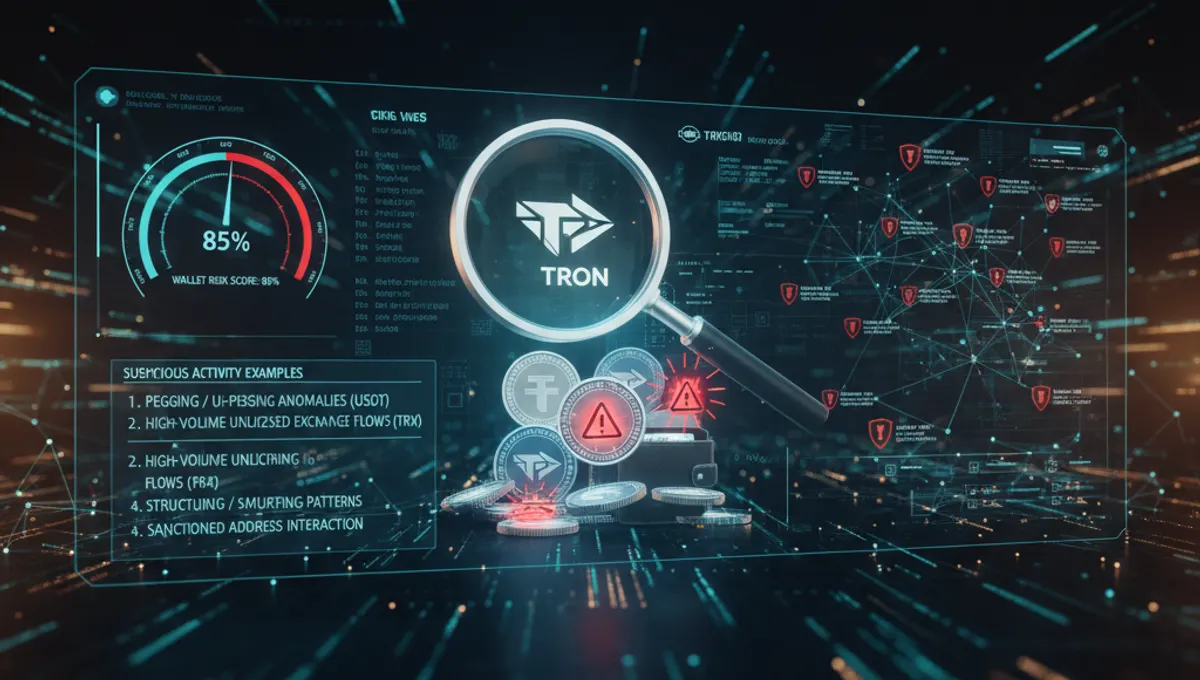
Mixer exposure is one of the most common red flags. If a wallet has sent or received funds through a known coin mixer, the transaction history becomes opaque, and regulators treat this as deliberate obfuscation. Darknet market links are equally serious: any address that has received payments from or sent funds to known darknet marketplaces (identified by blockchain analysis) signals potential illegal commerce. Stolen funds appear when a wallet receives coins reported as stolen in theft incidents; these are often flagged within hours of the theft. Sanctions violations occur when a wallet belongs to or has transacted with an individual or entity on OFAC or similar sanctions lists. Gambling and ransomware exposure are also tracked: wallets that have moved funds to or from gambling platforms or ransomware payment addresses carry elevated risk. Scam-linked addresses are flagged when they receive deposits from known Ponzi schemes, rug pulls, or phishing campaigns.
How to Check a Wallet Before Receiving USDT or TRX
Before accepting USDT (TRC20 or ERC20) or TRX into your wallet, follow these steps to screen for suspicious activity:
- Copy the sender's wallet address.
- Visit a trusted AML check service (our curated AML Services page lists verified providers).
- Paste the address and select the blockchain (Tron for TRX/USDT TRC20, Ethereum for USDT ERC20).
- Review the risk score and detailed report, which shows transaction history, mixer exposure, and sanctions flags.
- Check the AML check requirements: most services require only the address, though some offer enhanced reports for a fee.
- If the risk score is below your acceptable threshold (typically 20–30% for institutional use), proceed; if above 50%, decline the transaction.
- Document the check result for compliance records.
The entire AML check process takes 1–3 minutes. Most services display results instantly; some offer batch checks for multiple addresses at a reduced AML check fee.
Risk Score Levels and What They Mean
Risk scores provide a standardized way to evaluate wallet safety. A low-risk score (0–20%) indicates minimal suspicious activity: the wallet has a clean transaction history, no mixer exposure, and no sanctions flags. These addresses are safe to receive funds from. Medium-risk scores (20–50%) suggest some caution: the wallet may have interacted with lower-risk services, received funds from unverified sources, or shown unusual transaction patterns. Manual review is recommended before accepting large transfers. High-risk scores (50–70%) indicate serious concerns: the wallet has likely touched mixers, received stolen funds, or shown clear obfuscation attempts. Most exchanges and institutional buyers reject these. Critical-risk scores (70%+) mean the wallet is almost certainly involved in illicit activity: sanctions violations, darknet connections, or confirmed theft. Never accept funds from critical-risk addresses. Your compliance policy should define which thresholds trigger rejection or escalation to your AML team.
What Happens When Your Coins Are Flagged as Tainted
If you receive or hold coins flagged as tainted (high AML risk), several consequences can follow. Exchanges may freeze your account during investigation, preventing withdrawals or trades. This freeze can last days to weeks while the exchange's compliance team reviews the transaction source. If the coins are confirmed as stolen or sanctions-linked, your account may be permanently closed, and the funds forfeited. Regulators may contact you for information about the transaction source. Your personal or business reputation may be damaged if the incident becomes public. To avoid this, always run an AML check on large incoming transfers before accepting them. If you accidentally receive tainted coins, immediately notify your exchange and cooperate with their investigation. Do not attempt to move the coins to another exchange; this typically triggers additional flags and may be treated as money laundering. Document your due diligence (the AML check you performed) to show good-faith compliance effort.
Best Practices for Avoiding Suspicious Activity Risk
Implement these practices to minimize exposure to tainted coins and regulatory penalties:
- Screen all incoming transfers above a set threshold (e.g., $1,000 USD equivalent) using a trusted AML check service.
- Maintain records of every AML check you perform, including the date, address, risk score, and decision.
- Set a clear risk tolerance policy: define which risk score levels your organization accepts, rejects, or escalates.
- Use only reputable exchanges and wallets that perform their own AML checks on deposits.
- Avoid receiving funds from unknown or newly created wallets without explanation.
- Do not use mixers or privacy coins if you plan to move funds to regulated exchanges.
- Verify sender identity through out-of-band communication before large transfers.
- Review your transaction history regularly for unexpected outbound transfers or account compromises.
- Educate team members on phishing and social engineering that may lead to account takeover and suspicious transfers.
These steps reduce both compliance risk and the likelihood of losing funds to theft or sanctions violations.
Frequently asked questions
What is the most common suspicious activity in crypto AML checks
Mixer exposure is the most frequently flagged red flag. When a wallet sends or receives funds through a coin mixer, the transaction trail becomes intentionally obscured, which regulators treat as deliberate obfuscation of fund origins. Blockchain analytics tools automatically flag mixer interactions, and most exchanges reject wallets with mixer exposure above a certain threshold.
How much does an AML check cost
AML check fees vary by service and depth of analysis. Basic checks (address screening only) often cost $1–5 per address or are included free with limited results. Comprehensive AML checks with full transaction history, sanctions verification, and detailed risk reports typically cost $10–50 per address. Batch checks and enterprise subscriptions offer lower per-address rates. Check our AML Services page for current pricing from verified providers.
Can I receive USDT or TRX from a high-risk wallet
Technically yes, but it is not advisable. Receiving tainted coins can result in your exchange account being frozen during investigation, your funds being forfeited if the coins are confirmed as stolen or sanctions-linked, and regulatory scrutiny. Always screen incoming transfers with an AML check first. If the risk score exceeds your policy threshold, decline the transaction or request clarification from the sender.
What does a low AML risk score mean
A low risk score (typically 0–20%) indicates the wallet has a clean transaction history with no mixer exposure, sanctions flags, or confirmed theft links. These addresses are safe to receive funds from. Low-risk wallets show normal transaction patterns, originate from reputable sources, and have no suspicious activity indicators in blockchain analytics databases.
How long does an AML check take
Most AML checks complete in 1–3 minutes. The service queries blockchain data and cross-references the address against sanctions lists, mixer databases, and theft reports in real time. Results are typically displayed instantly in a dashboard or report. Batch checks of multiple addresses may take slightly longer but usually complete within 5–10 minutes.