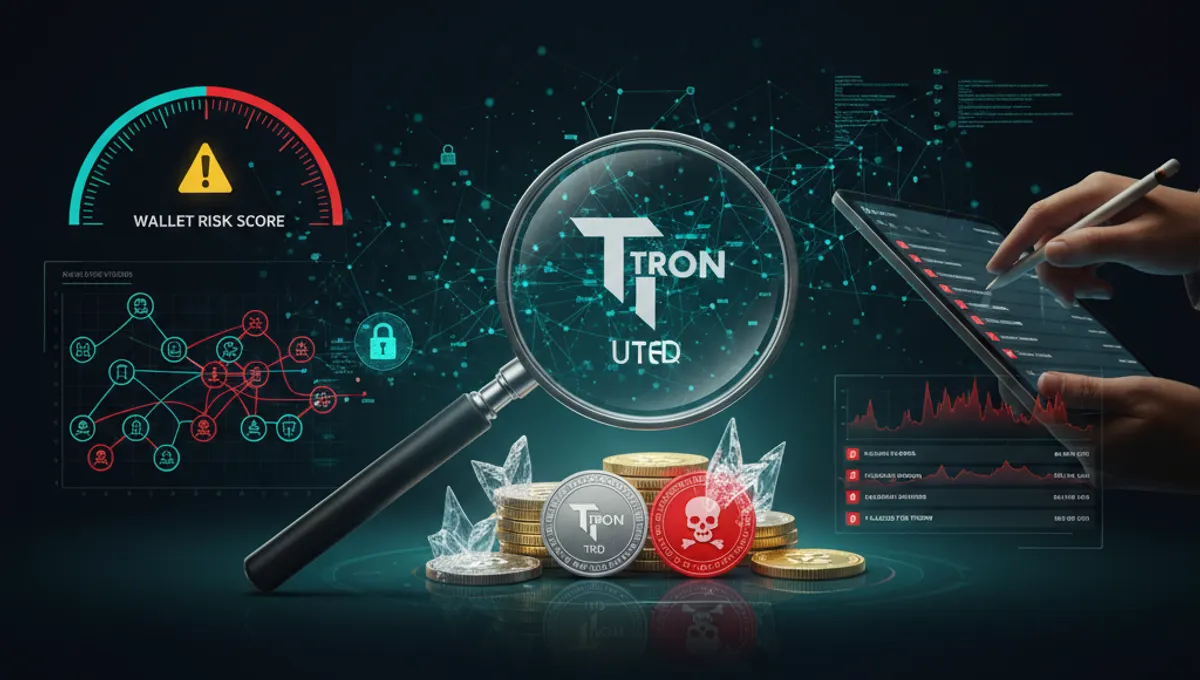
What Is a Crypto Wallet App Test and Why Does It Matter
A crypto wallet app test is a compliance check that scans a blockchain address for red flags: prior transactions with mixers, darknet markets, stolen fund sources, sanctioned entities, or gambling platforms. When you test a wallet before receiving funds, you avoid accepting tainted coins that exchanges will later freeze or flag as dirty crypto. Risk scoring assigns a numerical rating—low, medium, or high—based on transaction history and counterparty risk. A wallet that has never touched a mixer or darknet market typically scores low risk. One that has received funds from a known scam or sanctioned address scores high. Testing is especially critical for USDT on Tron (TRC20) and Bitcoin addresses, where compliance monitoring is strict. If your exchange receives a high-risk deposit, your account may be frozen pending investigation, and you may lose access to your funds temporarily or permanently.
How Crypto Wallet Risk Scoring Works
Risk scoring combines several data points into a single metric. First, the system checks the wallet's transaction history against known blacklists: sanctioned addresses, darknet market wallets, and stolen fund databases. Second, it traces inbound and outbound transactions to identify exposure to high-risk counterparties. A wallet that has sent funds to a mixer (a service designed to obscure transaction trails) receives a higher risk score, even if the mixer itself is not illegal. Third, the scoring model weighs recency—recent suspicious activity raises risk more than old transactions. Fourth, it considers transaction volume and frequency; unusual patterns may indicate compromised wallets or money laundering. Most AML services assign scores on a 0–100 scale or use categorical ratings (low, medium, high, critical). A score below 30 is typically considered acceptable for most exchanges. Scores above 70 trigger mandatory investigation or rejection. The crypto wallet explained in compliance terms is a blockchain address whose risk profile is determined by its full transaction lineage, not just its current balance.
Step-by-Step: How to Test a Crypto Wallet Before Receiving Funds
Follow these steps to screen a wallet address safely:
- Obtain the full wallet address (e.g., a Tron TRC20 address starting with T, or a Bitcoin address starting with 1, 3, or bc1).
- Visit a trusted AML screening service—our curated list of verified AML services on this site includes platforms that offer wallet checks with transparent risk scoring.
- Paste the address into the search field and run the scan.
- Review the risk score and detailed report: check for flagged transactions, counterparty exposure, and any links to known scams or sanctions lists.
- Look at the transaction graph if available—it shows which wallets have sent to or received from your address.
- If the risk score is low (typically under 30), the wallet is generally safe to receive from.
- If the score is medium (30–70), investigate further: ask the sender why the wallet has that history, or request a different address.
- If the score is high (above 70), reject the transaction or escalate to compliance.
This process takes 2–5 minutes and prevents costly mistakes. Many exchanges now require this screening before large deposits.
Crypto Wallet Fees and Screening Costs
Screening a wallet address typically costs nothing to very little. Many AML services offer a free tier with limited daily checks (e.g., 5–10 scans per day). Premium tiers unlock unlimited checks, detailed reports, and API access for businesses. Crypto wallet fees (transaction fees charged by the blockchain network) are separate from screening costs. When you send crypto, the network charges a fee in the native token (e.g., TRX for Tron, BTC for Bitcoin). Screening does not add to this fee—it is a separate compliance step. Some exchanges bundle wallet screening into their deposit process at no extra charge; others charge a small fee (typically under 1 USD) per check. For individuals receiving occasional transfers, free screening tools are sufficient. For businesses processing many deposits, a paid AML service subscription is more cost-effective than paying per-check fees. Check the pricing page of any service before committing.
Crypto Wallet Ranking: What Makes a Wallet High-Risk or Low-Risk
Wallets are ranked by risk based on several factors. A low-risk wallet typically has:
- No transactions with known mixers or tumblers.
- No inbound funds from sanctioned addresses or darknet markets.
- No history of involvement in scams or stolen fund transfers.
- Consistent, legitimate transaction patterns.
- Age (older wallets with clean histories are lower risk).
A high-risk wallet may have:
- Direct or indirect exposure to darknet marketplaces (e.g., received funds from a wallet that sent to a known marketplace).
- Transactions with privacy mixers designed to obscure fund origins.
- Inbound transfers from addresses flagged in sanctions databases.
- Rapid movement of large sums in short periods (potential money laundering signal).
- Links to gambling platforms, especially unregulated ones.
- Prior involvement in Ponzi schemes or rug pulls.
Crypto wallet ranking systems vary by service, but most use similar risk categories. A crypto wallet number (the address itself) does not determine risk—only its transaction history does. Two identical wallet formats can have vastly different risk scores depending on what they have done.
What to Do If Your Wallet Is Flagged as Dirty Crypto
If you receive a high-risk score when testing a wallet, or if an exchange flags your deposit as dirty crypto, take these steps:
- Do not panic. A high risk score does not mean the funds are stolen; it means the wallet has touched high-risk counterparties.
- Request a detailed report from the AML service or exchange. Understand which specific transactions triggered the flag.
- If you are the wallet owner, trace the source of the flagged funds. Ask your sender where they received the crypto and whether they can provide documentation.
- If the funds came from a legitimate source (e.g., a paycheck from an employer, a sale of goods), gather proof: invoices, employment contracts, or transaction records.
- Submit this documentation to the exchange's compliance team. Many exchanges will clear the hold if you can prove legitimate source.
- If the funds are genuinely tainted (e.g., you unknowingly received stolen crypto), you may need to report the incident to law enforcement and cooperate with the exchange's investigation.
- Going forward, only receive funds from wallets you have tested and verified as low-risk.
Exchanges freeze USDT and other assets to comply with anti-money laundering regulations. The freeze is temporary in most cases if you cooperate with the investigation.
Choosing a Wallet Screening Service: What to Look For
Not all wallet screening tools are equal. When evaluating a service, check:
- Transparency: Does the service explain how it calculates risk scores and which data sources it uses?
- Coverage: Does it screen Tron (TRC20), Bitcoin, Ethereum, and other blockchains you need?
- Speed: Can it return results in seconds, or does it take hours?
- Accuracy: Do users report false positives (low-risk wallets flagged as high-risk)?
- Compliance: Is the service used by regulated exchanges and financial institutions?
- Support: Can you contact the provider if you have questions about a report?
- Cost: Is pricing transparent and reasonable for your use case?
Our curated list of verified AML services on this site includes platforms that meet these criteria. Starting with a trusted service from that list is the safest approach—these providers have been vetted for accuracy and compliance standards. Avoid free tools with no track record or services that do not disclose their methodology.
Frequently asked questions
Can I test a crypto wallet for free before sending money
Yes. Most AML screening services offer free wallet tests, typically 5–10 scans per day. For occasional checks, free tiers are sufficient. If you need unlimited daily screening, paid subscriptions start around 10–50 USD per month. Free tools are reliable if they come from established compliance providers listed on verified service directories.
What does a high-risk score on a crypto wallet mean
A high-risk score (usually above 70) means the wallet has transacted with high-risk counterparties: mixers, darknet markets, sanctioned addresses, or scam wallets. It does not prove the wallet owner is guilty of wrongdoing, but it signals the funds may be tainted. Exchanges will likely freeze deposits from high-risk wallets pending investigation.
How long does a crypto wallet app test take
Most wallet screening scans complete in 2–10 seconds. The service checks the address against known blacklists and analyzes transaction history in real time. Some detailed reports with full transaction graphs may take up to 1 minute. Instant results are standard for reputable AML services.
Will testing a wallet flag my own account
No. Screening a wallet address for AML risk does not flag your account. You are simply gathering information before a transaction. Exchanges only flag accounts if you deposit high-risk funds or fail to cooperate with compliance investigations after a deposit is flagged.
What crypto wallet example would fail an AML test
A wallet that has received funds from a known darknet marketplace, sent to a mixer, or received stolen crypto would fail. For example, a wallet that received USDT from an address linked to a ransomware attack or a sanctioned entity would score high-risk. Conversely, a wallet used only for peer-to-peer transfers between friends typically passes with a low score.