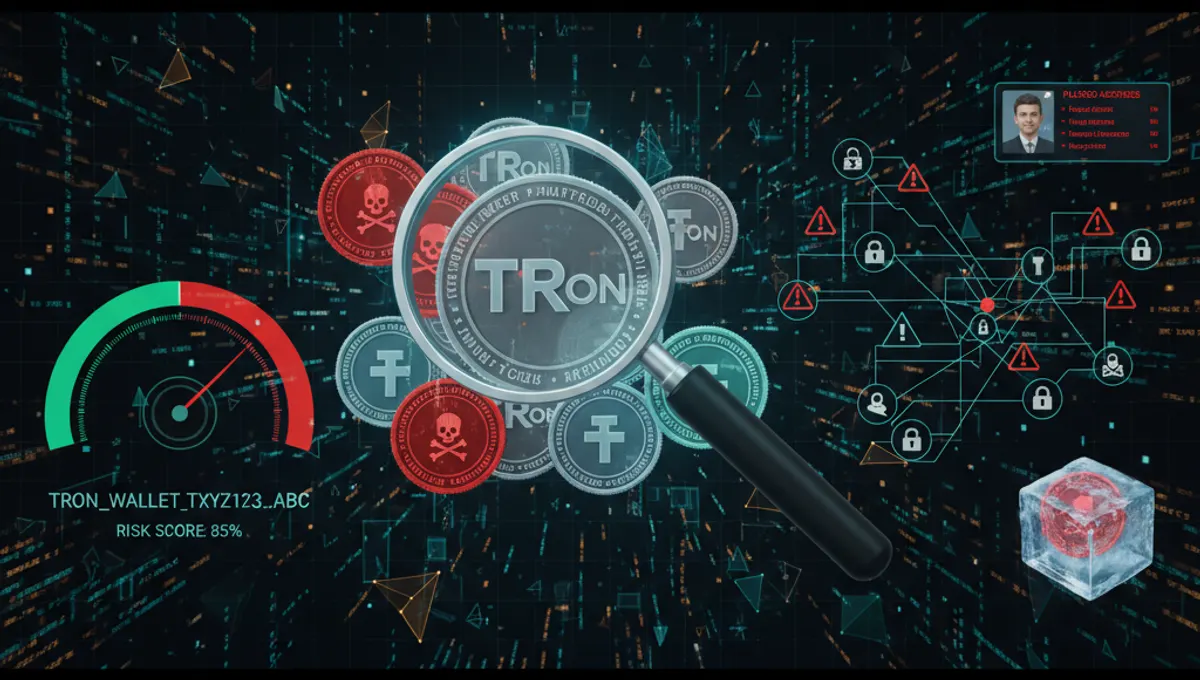
What Is a TRON Address and Why Check It
A TRON address is a 34-character alphanumeric string starting with 'T' that identifies a wallet on the TRON blockchain. It holds TRX tokens and USDT TRC20 stablecoins. Checking a TRON address means querying its transaction history and risk profile to determine whether the wallet or its incoming funds are clean or compromised. This TRON address checker process is essential because exchanges and custodians now screen deposits for compliance; if a wallet has received stolen funds, ransomware proceeds, or coins from sanctioned entities, your account can be frozen even if you didn't know the source. A TRON address meaning in compliance terms is not just a label—it's a record of every transaction tied to that wallet, and that record can carry legal and financial consequences. Before accepting a large USDT TRC20 transfer or sending funds to an unfamiliar address, a quick TRON address lookup protects you from inheriting tainted coins and the account bans that follow.
How AML Risk Scoring Works for TRON Wallets
An AML risk score for a TRON address is a numerical rating (typically 0–100 or 0–1000) that reflects the likelihood the wallet or its funds are associated with illicit activity. Risk scoring algorithms analyze on-chain data: transaction volume, counterparty wallets, time patterns, and cluster associations. A wallet that has received funds from a known mixer, darknet market, or ransomware address gets a higher risk score. Conversely, a wallet with a long clean history and transparent sources scores lower. Risk levels are usually categorized as low (green), medium (yellow), or high (red). A low-risk TRON address typically has legitimate sources, stable transaction patterns, and no known links to theft, sanctions, or illegal marketplaces. A high-risk address may have received coins from gambling platforms, stolen-fund wallets, or entities on sanctions lists. When you check a TRON wallet address, the risk score helps you decide whether to accept the transfer or request alternative payment. Most exchanges and institutional custodians reject deposits above a certain risk threshold to comply with KYT (Know Your Transaction) rules.
Step-by-Step: How to Check a TRON Address Before Receiving USDT
Follow these steps to screen a TRON address before accepting a transfer:
- Collect the full TRON address (34 characters, starting with 'T') from the sender.
- Visit a trusted AML screening service listed on our verified AML Services page—these tools integrate blockchain data and sanctions lists to generate risk reports.
- Paste the address into the TRON address checker tool.
- Review the risk score and detailed report: check for mixer exposure, darknet links, stolen-fund flags, and sanctions matches.
- Look at the transaction history: examine the wallet's incoming sources and outgoing destinations.
- If the risk score is low and sources are transparent, the transfer is likely safe.
- If the score is high or sources are unclear, ask the sender for clarification or request payment via an alternative method.
- Document the check result for your compliance records.
This TRON address lookup process takes minutes and prevents you from receiving frozen coins or triggering exchange account bans. Always check before accepting large transfers, especially from new counterparties.
What Risk Score Levels Mean and Acceptable Thresholds
Risk score interpretation depends on your use case and regulatory environment:
Low Risk (0–20): The wallet has clean sources, no known illicit links, and transparent transaction history. Safe to accept.
Medium Risk (21–50): The wallet may have minor red flags—for example, some interaction with mixing services or gambling platforms, but no confirmed theft or sanctions exposure. Many institutions accept medium-risk transfers with additional scrutiny.
High Risk (51–100): The wallet has strong indicators of illicit activity: confirmed mixer use, darknet market links, stolen-fund flags, or sanctions matches. Most exchanges and custodians reject high-risk deposits.
Acceptable thresholds vary by institution. Retail users often accept anything below 50; institutional buyers typically reject anything above 20. If you're receiving USDT TRC20 for business purposes, a low-risk score (under 20) is the safest standard. If a sender's address scores high, request an explanation or alternative payment. Document your decision for audit trails. When in doubt, use the verified AML services on our AML Services page to generate an official report you can reference.
Common Risk Flags: Mixers, Darknet, Stolen Funds, and Sanctions
A TRON address check flags several risk categories:
Mixer Exposure: The wallet has sent or received funds through a mixing service designed to obscure transaction trails. Mixers are legal in some jurisdictions but raise compliance concerns because they're often used to launder illicit proceeds.
Darknet Market Links: The address has received coins from or sent coins to known darknet marketplaces. This is a high-risk indicator and typically triggers exchange freezes.
Stolen Funds: The wallet has received cryptocurrency known to be stolen from hacks, scams, or theft. Blockchain analytics firms track stolen coins across addresses; receiving them can result in account bans.
Sanctions Exposure: The address is linked to an entity on OFAC, EU, or other sanctions lists. Transacting with sanctioned wallets violates international law and triggers immediate account freezes.
Ransomware Proceeds: The wallet has received payments from ransomware attacks. These are flagged as high-risk and often frozen by exchanges.
Gambling and Scam Links: The address has interacted with known gambling platforms or scam schemes. Risk varies by jurisdiction; some exchanges tolerate gambling, others don't.
When you check a TRON address, the report should clearly label which flags apply. If any high-risk flag appears, reconsider the transfer.
What Happens If You Receive Tainted Coins or Frozen USDT
If you receive USDT TRC20 or TRX flagged as tainted, several outcomes are possible:
Exchange Account Freeze: When you deposit the coins to an exchange, the platform's compliance system detects the risk score and freezes your account pending investigation. This can last days to weeks.
Withdrawal Blocks: Your exchange may allow you to hold the coins but block withdrawals until the source is verified or the coins are deemed clean.
Forced Liquidation: Some exchanges automatically liquidate high-risk deposits and hold the proceeds in escrow.
Legal Inquiry: If the coins are linked to theft or sanctions, you may receive inquiries from the exchange or law enforcement asking you to prove you didn't knowingly receive stolen funds.
Permanent Ban: Repeated receipt of tainted coins or failure to cooperate with compliance can result in permanent account closure.
To minimize risk: always check a TRON wallet address before accepting large transfers, maintain documentation of your due diligence, and use the verified AML services on our AML Services page to generate official screening reports. If you do receive flagged coins, contact your exchange's compliance team immediately with proof that you screened the address and acted in good faith.
Comparing AML Check Services for TRON Address Screening
Several services offer TRON address checker functionality. When choosing a tool, consider accuracy, coverage, ease of use, and cost. Our curated AML Services page lists verified providers that integrate real-time blockchain data, sanctions lists, and stolen-fund databases. Key differences include:
Coverage: Some services cover only TRON; others include Ethereum, Bitcoin, and other blockchains. If you handle multiple chains, a multi-chain service is more efficient.
Update Frequency: Real-time updates are critical. Services that refresh sanctions lists and stolen-fund data daily are more reliable than those that update weekly.
Report Detail: Basic reports show risk score only; detailed reports include transaction history, counterparty analysis, and specific risk flags. Detailed reports cost more but are worth it for institutional use.
Free vs. Paid: Many services offer free TRON address lookup for a limited number of checks per month; unlimited checks require a subscription. For occasional use, free tiers suffice. For regular compliance screening, paid plans are necessary.
API Access: If you need to automate screening across many wallets, API access is essential. Not all services offer this.
Start by checking the verified AML services on our AML Services page; they've been vetted for accuracy and compliance standards. Run a test check on a known address to compare results before committing to a service.
Frequently asked questions
How do I check if a TRON address is safe before receiving USDT
Use a verified AML screening service to paste the TRON address and review the risk score and transaction history. Look for flags like mixer exposure, darknet links, or sanctions matches. If the score is low (under 20) and sources are transparent, it's safe. If high, ask the sender for clarification or decline the transfer.
What does a high risk score mean for a TRON address
A high risk score (above 50) indicates the wallet has likely received stolen funds, interacted with mixers or darknet markets, or is linked to sanctions. Exchanges typically freeze deposits from high-risk addresses. Avoid receiving coins from these wallets unless you have verified the source independently.
Can I get my account unfrozen if I received tainted TRON coins
Contact your exchange's compliance team immediately with proof that you screened the address before accepting the transfer. Provide documentation from an AML check service showing you acted in good faith. Unfreezing depends on the severity of the flag and the exchange's policies; cooperation and transparency improve your chances.
Is there a free TRON address checker I can use
Many AML services offer free checks with limits (e.g., 5–10 per month). Check our verified AML Services page for options. Free tiers are adequate for occasional screening; if you check addresses regularly, a paid subscription is more practical and often includes better reporting detail.
What is the difference between checking a TRON address and a Bitcoin address
The process is identical: you use an AML screening service to query the address, review the risk score, and examine transaction history. The main difference is the blockchain data source—TRON uses the TRON network, Bitcoin uses the Bitcoin network. Multi-chain services can check both.