What Is a TRON Token Address and How Does It Work
A TRON token address is a 34-character string starting with 'T', generated from a private key using cryptographic hashing. Each address is unique to one wallet and serves as the public identifier for receiving TRX and TRC20 tokens (like USDT on the TRON network). Unlike traditional bank accounts, TRON addresses are pseudonymous—anyone can see transaction history on the public blockchain, but the owner's identity is not automatically revealed. When you initiate a transfer, the blockchain records the sender address, recipient address, amount, and timestamp permanently. This transparency is why a tron address lookup is essential before accepting funds: you can trace the source and history of tokens before they reach your wallet.
Why You Need to Check TRON Addresses Before Transfers
Receiving tainted coins—tokens linked to theft, ransomware, sanctions violations, or darknet markets—can freeze your exchange account or result in permanent fund seizure. Exchanges and custodians use blockchain analytics to flag high-risk addresses and block withdrawals. A tron address checker helps you identify risk before the transaction settles. Key reasons to perform a tron address check:
- Stolen funds may be clawed back by law enforcement, leaving you with a loss;
- Sanctioned entity exposure can trigger compliance holds;
- Mixer and gambling-linked addresses carry elevated risk;
- Scam proceeds are often traced and flagged by exchanges. Checking the counterparty's address and transaction history takes minutes and prevents costly mistakes.
How to Check a TRON Address: Step-by-Step Process
Follow these steps to perform a tron address check before accepting or sending TRX or TRC20 tokens:
- Obtain the full TRON address (starts with 'T', 34 characters).
- Visit a blockchain explorer or AML screening service (see our curated AML Services list for verified providers).
- Paste the address into the search field.
- Review the transaction history: look for the source of funds, frequency of transfers, and any red flags.
- Check the address against AML risk scoring: services will flag high-risk activity such as mixer interactions, darknet exposure, or sanctions list matches.
- Review the risk score and detailed report before proceeding.
- If risk is acceptable (low to medium), proceed; if high, request a different address from the counterparty.
Most AML services provide a risk score (often 0–100 or low/medium/high) and categorize exposure by risk type. Trusted services on our AML Services page offer both free and paid tiers for address verification.
Understanding TRON Address Risk Scores and What They Mean
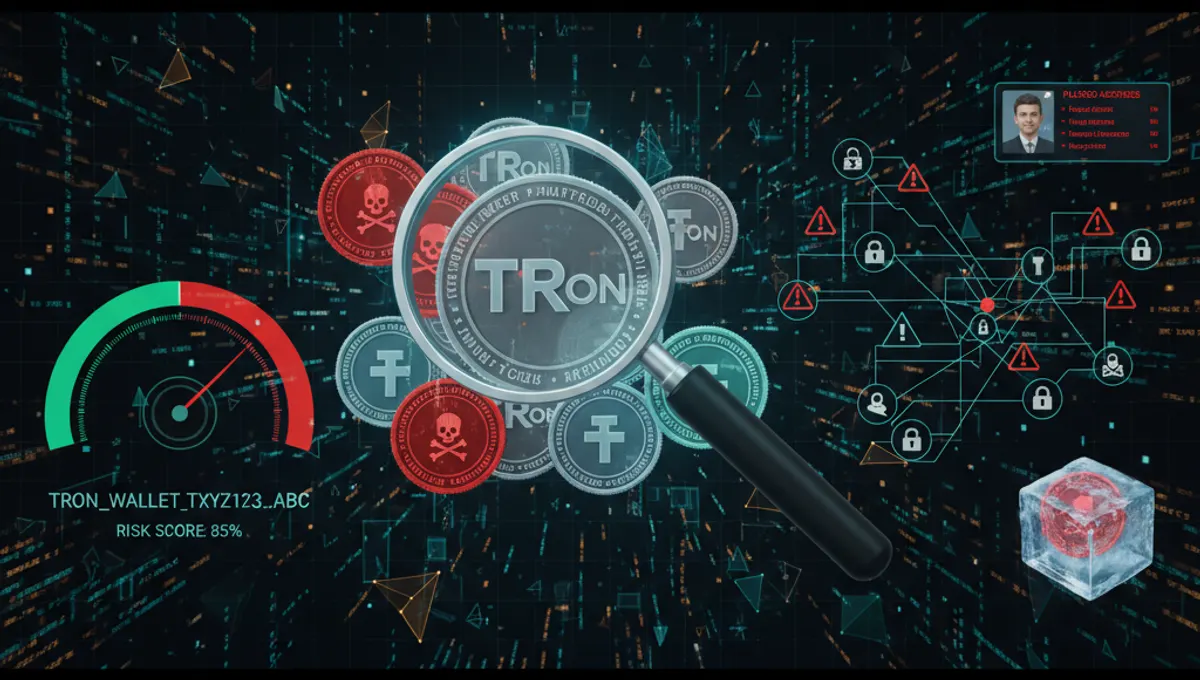
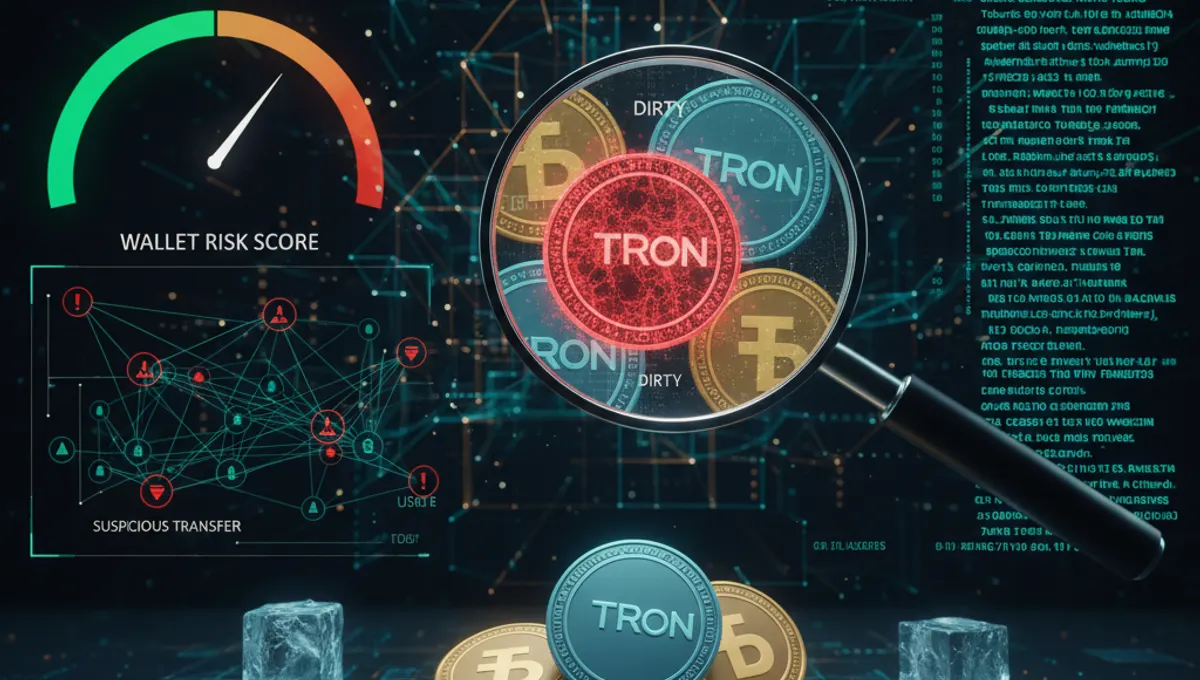
An AML risk score quantifies the likelihood that a TRON address is linked to illicit activity. Scores typically range from 0 (clean) to 100 (high risk), though some services use categorical ratings (low, medium, high). A low risk score (0–20) indicates minimal exposure to theft, sanctions, or darknet activity. Medium risk (21–60) suggests some exposure—such as interaction with mixers or gambling platforms—but not necessarily illegal activity. High risk (61–100) flags direct links to stolen funds, sanctioned entities, ransomware wallets, or darknet markets. When checking a tron address, also review the detailed breakdown: which specific risk categories apply (e.g., 'mixer exposure,' 'sanctioned entity,' 'stolen funds'). This helps you decide whether the risk is acceptable for your use case. Conservative businesses reject any address with medium or high risk; others may accept medium risk if the transaction amount is small.
Common TRON Address Risk Categories to Watch For
When you perform a tron address lookup, watch for these red flags:
• Mixer exposure: Address has sent or received funds through privacy mixers, which obscure transaction trails. • Darknet market links: Address is associated with known darknet marketplaces or vendors. • Stolen funds: Address received tokens flagged as proceeds of theft or hacking. • Sanctions list match: Address is linked to sanctioned jurisdictions or entities (OFAC, EU, UN lists). • Ransomware wallet: Address received ransom payments or is controlled by known ransomware operators. • Scam proceeds: Address is tied to Ponzi schemes, rug pulls, or investment fraud. • Gambling platform: Address interacts with unregulated gambling services (not inherently illegal but higher compliance risk). • High transaction velocity: Rapid movement of funds in and out suggests layering or money laundering.
Each risk category carries different compliance weight. Stolen funds and sanctions matches are typically deal-breakers; mixer exposure or gambling links may be acceptable depending on your risk tolerance and regulatory environment.
How to Use a TRON Address Checker Tool
Most blockchain explorers and AML services offer a free tron address checker with basic functionality. Here's how to use one:
- Open the service (visit our AML Services page for verified options).
- Select 'TRON' or 'TRX' as the blockchain.
- Paste the address into the search box.
- Click 'Check' or 'Analyze'.
- The tool returns transaction history, balance, and (if AML-enabled) a risk score and category breakdown.
- Free tiers typically show transaction count and basic risk flags; paid tiers provide detailed reports, historical tracking, and API access.
- Export or screenshot the report for your records.
For high-value transfers or compliance-critical decisions, use a paid AML service from our curated list. These provide detailed forensic analysis, sanctions screening, and audit trails suitable for institutional use. Free tools are adequate for personal wallet verification and low-risk transfers.
What to Do If a TRON Address Is Flagged as High Risk
If a tron address check returns a high-risk score, take these steps:
- Do not proceed with the transfer unless you have a legitimate reason and compliance approval.
- Contact the sender or counterparty and ask for an alternative address with lower risk.
- Request documentation explaining the high-risk flags (e.g., if they received funds from a mixer for privacy reasons, ask for context).
- If the transfer is unavoidable, document your decision and the risk assessment for compliance records.
- Notify your exchange or custodian before depositing the funds; some will reject high-risk tokens outright.
- Consider splitting the transfer into smaller amounts across multiple addresses (not recommended for compliance purposes; better to reject the transfer).
- If you receive flagged tokens unexpectedly, contact your exchange immediately to report and freeze the funds.
Exchanges and banks increasingly use transaction monitoring to detect and block high-risk deposits. Receiving tainted coins can result in account suspension, fund seizure, or permanent account closure.
Free vs. Paid TRON Address Checking Services
Free services: Blockchain explorers like Tronscan provide transaction history and basic address info at no cost. They show balance, transaction count, and recent activity but do not include AML scoring or sanctions screening. Suitable for casual verification and learning.
Paid AML services: Specialized providers offer risk scoring, sanctions list matching, mixer detection, and detailed forensic reports. Costs range from a few dollars per check to subscription models for high-volume screening. These are essential for businesses, exchanges, and large transfers. Our AML Services page lists verified providers with transparent pricing and capabilities.
Mid-tier options: Some services offer limited free checks (e.g., 1–5 per month) with paid upgrades for unlimited access or detailed reports. This is a good starting point for individuals who occasionally need to verify addresses.
For compliance-critical decisions, always use a paid service from a reputable provider. Free tools are useful for initial triage but lack the depth and audit trail required for institutional risk management.
Frequently asked questions
How do I know if a TRON address is safe to receive funds from
Use a tron address checker to scan the address for AML risk. Look for a low risk score (0–20), no sanctions matches, and no direct links to stolen funds or darknet markets. Check the transaction history to see where the funds originated. If the risk score is medium or high, request an alternative address or decline the transfer. Always verify before accepting large amounts.
What does a TRON address starting with T mean
The 'T' prefix indicates the address is on the TRON blockchain (mainnet). All TRON addresses are 34 characters long and start with 'T'. This distinguishes them from Ethereum addresses (0x), Bitcoin addresses (1, 3, bc1), or other blockchains. The 'T' is part of the address encoding and has no special meaning beyond network identification.
Can I check a TRON address for free
Yes. Blockchain explorers like Tronscan offer free transaction history and balance lookup. For AML risk scoring and sanctions screening, free tiers are limited. Most comprehensive AML checks require a paid subscription. Our AML Services page lists providers with free trial options and affordable per-check pricing for individuals.
What happens if I receive USDT on a TRON address flagged as high risk
Your exchange may freeze the funds, block your account, or require additional verification. In severe cases (sanctions matches, stolen funds), the exchange may permanently seize the tokens. Always check the sender's address before accepting transfers. If you receive flagged funds unexpectedly, contact your exchange immediately to report and prevent account suspension.
How do I look up a TRON address on the blockchain
Visit Tronscan.org or another TRON explorer, paste the address into the search bar, and click search. You'll see the address balance, transaction history, and token holdings. For AML risk assessment, use a dedicated AML service from our curated list. Explorers show on-chain data; AML tools add compliance context like risk scores and sanctions matches.