What Is a Tron Address and Why Check It?
A Tron address is a 34-character alphanumeric identifier on the Tron blockchain, starting with 'T'. It functions as a wallet location where TRX tokens and USDT TRC20 stablecoins are stored and transferred. A tron address meaning extends beyond a simple label: it represents a transaction history, fund sources, and behavioral patterns on the blockchain. Checking a Tron address reveals whether it has received or sent funds linked to high-risk activities. Exchanges, custodians, and regulated businesses use tron address lookup tools to comply with anti-money laundering (AML) and know-your-customer (KYC) regulations. If you receive USDT or TRX from a flagged address, your own account may be frozen or your funds seized, even if you were unaware of the risk. A quick tron address check before accepting a transfer is the first line of defense against tainted coins and compliance violations.
How Does Tron Address AML Screening Work?
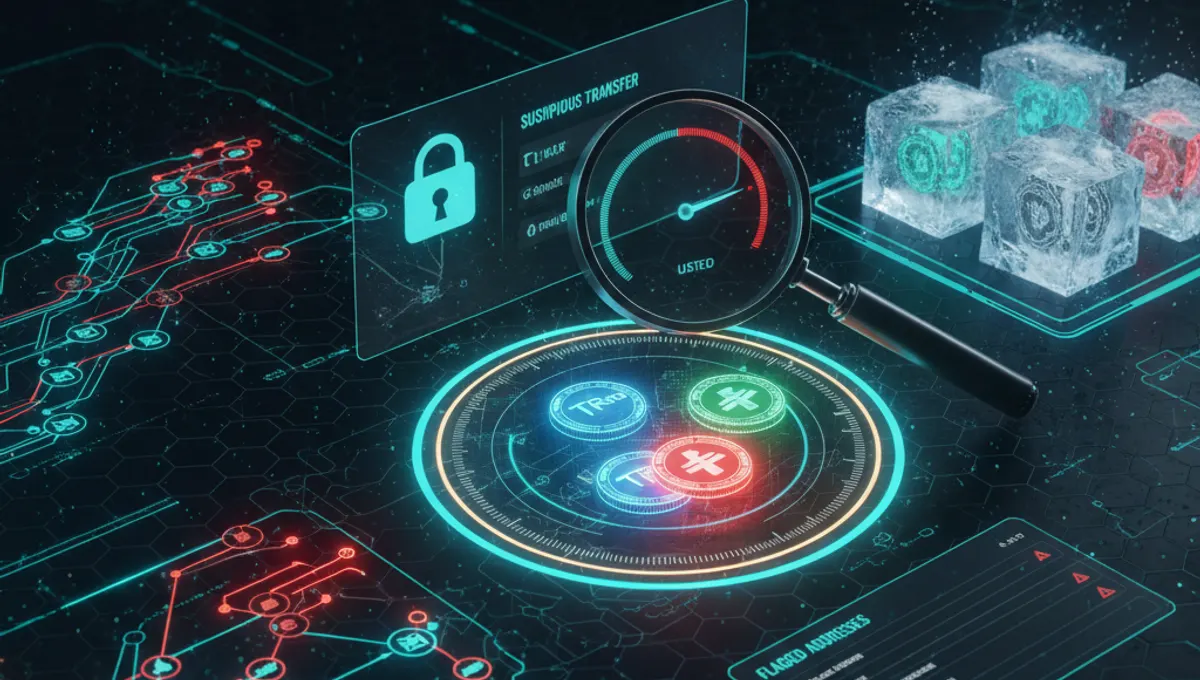
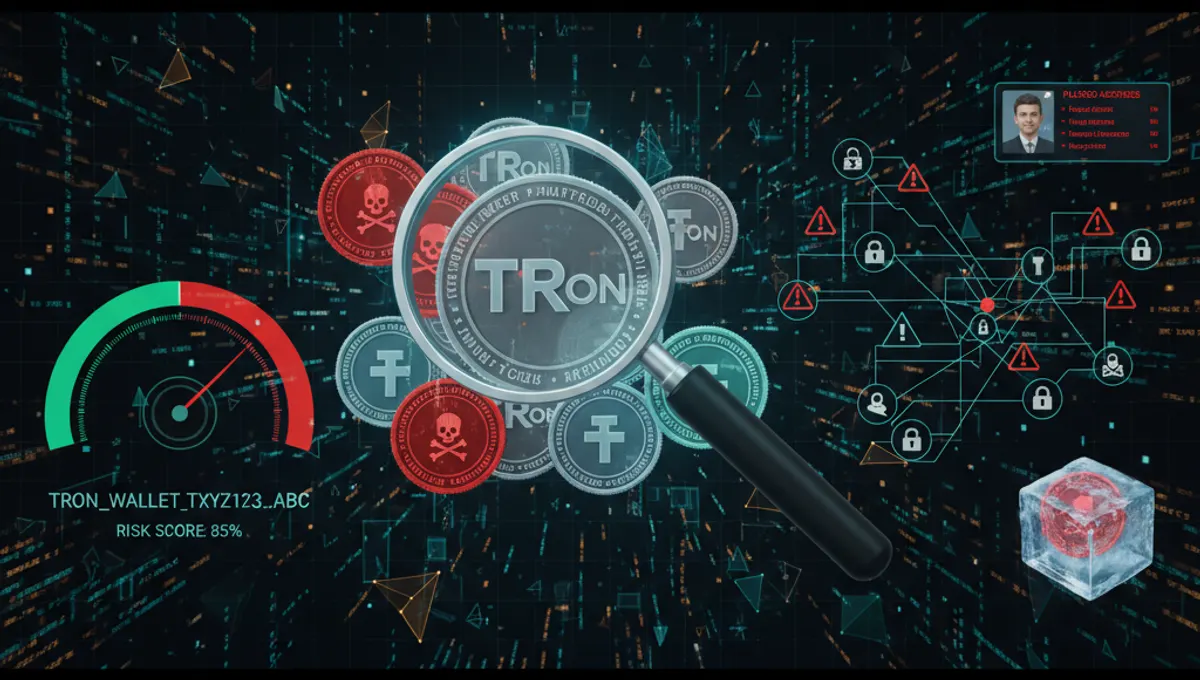
AML screening of a Tron address involves cross-referencing the address against multiple data sources: blockchain transaction history, sanctions lists (OFAC SDN, EU consolidated list), known darknet market wallets, mixer services, theft reports, and scam databases. When you check tron address data, the tool traces inbound and outbound transactions to identify patterns. A risk score is assigned based on factors such as: direct or indirect exposure to mixers (CoinJoin-like services), transactions with known darknet markets, receipt of stolen funds flagged in law enforcement databases, and connections to sanctioned jurisdictions or entities. The scoring model typically ranges from 0 (clean) to 100 (high risk). Intermediate scores (30–70) indicate moderate risk, often requiring manual review. The screening happens in real-time by querying the Tron blockchain and comparing addresses against updated compliance databases. Most services update their risk data weekly or daily. A single tron address check takes seconds and provides a risk report that exchanges and custodians use to decide whether to accept or reject a transaction.
Step-by-Step: How to Check a Tron Address Before Transfer
Follow these steps to perform a tron address check before sending or receiving USDT or TRX:
- Copy the recipient or sender Tron address (starts with 'T', 34 characters).
- Visit a verified AML screening service from the curated list of trusted providers on this site.
- Paste the address into the lookup field and select 'Tron' or 'TRC20' as the network.
- Click 'Check' or 'Scan' and wait for the risk report (typically 5–30 seconds).
- Review the risk score and detailed findings: any mixer exposure, darknet links, stolen fund flags, or sanctions matches.
- If the score is below your acceptable threshold (typically 20–30 for institutional use, 50+ for retail), proceed with caution or reject the transaction.
- If the address is flagged, do not send funds; contact the sender to verify legitimacy or request an alternative address.
- Document the check result for compliance records, especially if you are a business or exchange.
Most services allow 1–5 free checks per month; higher-volume screening requires a paid plan. For recurring tron address checks, consider a subscription service listed on our verified AML services page.
Understanding Tron Address Risk Score Levels
Risk scores for Tron addresses are typically categorized as follows:
0–20 (Clean): No detected exposure to high-risk activities. Safe to transact with for most users.
21–50 (Low-to-Moderate Risk): Minor exposure to mixers or unconfirmed associations. Acceptable for retail users; institutional users may require additional due diligence.
51–75 (Moderate-to-High Risk): Confirmed mixer usage, darknet market connections, or indirect links to stolen funds. Most exchanges will flag or freeze transactions. Manual review recommended.
76–100 (High Risk): Direct exposure to sanctioned entities, active darknet markets, recent theft reports, or OFAC SDN matches. Transactions will likely be blocked; funds may be frozen. Do not transact.
Your acceptable risk threshold depends on your role: retail users may tolerate scores up to 40–50, while regulated exchanges typically reject anything above 30. Institutional custodians often set thresholds at 10–20. When you check tron address risk, compare the score against your organization's compliance policy. If unsure, consult your compliance officer or use the guidance provided by the AML service you choose.
What Happens If Your Tron Address Is Flagged as High Risk?
If your Tron address receives a high-risk score or is flagged during a tron address lookup, several outcomes are possible:
Exchange Freeze: If you deposit flagged USDT or TRX to an exchange, your account may be frozen pending investigation. Withdrawal requests will be denied.
Compliance Review: The exchange or custodian will request additional documentation (identity verification, source of funds proof, transaction history) to determine if you are the beneficial owner or a victim of a scam.
Fund Seizure: In cases of confirmed theft or sanctions violations, funds may be permanently seized by law enforcement or the exchange.
Account Ban: Repeated receipt of tainted coins can result in permanent account closure.
Mitigation Steps: If your address is flagged, contact the exchange immediately with documentation proving you are not involved in illicit activity. Provide proof of the fund source (employer, family, legitimate sale). If you received stolen USDT or TRX unknowingly, report it to the exchange and law enforcement. Do not attempt to move flagged funds to another exchange; this often triggers additional scrutiny. Use a verified AML service to re-check your address after 30–60 days; risk scores may decrease if the flagged transaction is resolved or reclassified.
Common Tron Address Risk Factors and How to Avoid Them
High-risk Tron addresses typically exhibit one or more of these patterns:
Mixer Exposure: Funds routed through CoinJoin or similar mixing services. Avoid sending to or receiving from addresses with recent mixer activity.
Darknet Market Links: Addresses that have transacted with known darknet marketplace wallets. Never accept USDT or TRX from these sources.
Stolen Funds: Addresses flagged in theft or scam reports. Verify the sender's identity before accepting large transfers.
Sanctioned Entities: Addresses linked to OFAC-listed individuals, organizations, or jurisdictions. Transacting with these is illegal in most countries.
Gambling Platforms: Some high-volume gambling or betting services are flagged as elevated risk. Institutional users may reject these.
Scam Schemes: Addresses involved in Ponzi schemes, rug pulls, or phishing campaigns.
To protect yourself: Always check tron address data before accepting transfers above a certain threshold (e.g., $1,000+). Use the verified AML services listed on this site for consistent, reliable screening. Request sender verification through a secondary channel (phone, email) for unexpected large transfers. Maintain a whitelist of known-good addresses and flag any deviation. For businesses, implement mandatory tron address checks as part of your transaction approval workflow.
Choosing a Trusted Tron Address Checker Service
Multiple AML screening platforms offer tron address check functionality, each with different coverage, speed, and pricing. When selecting a service, evaluate these factors:
Coverage: Does the service screen Tron addresses against OFAC, EU sanctions, darknet databases, and theft registries?
Update Frequency: How often is the risk data refreshed? Daily or weekly updates are standard.
Speed: Can the service return a risk report in under 30 seconds?
Accuracy: Does the service minimize false positives (flagging clean addresses as risky)?
Free Tier: How many free checks per month are included?
Documentation: Does the service provide detailed reports suitable for compliance audits?
Support: Is customer support available if you need to dispute a flag or understand a finding?
We maintain a curated list of verified AML services on this site that meet these criteria. Before committing to a paid plan, test each service with a known-clean Tron address and a flagged one to compare results. Many services offer free trials. Start with a service from our verified list to ensure you are using a reputable platform with transparent methodology and reliable data sources.
Frequently asked questions
What does a tron address checker tell me?
A tron address checker screens the address against AML databases, sanctions lists, darknet markets, and theft reports. It returns a risk score (0–100) indicating exposure to mixers, stolen funds, sanctioned entities, or scams. The report helps you decide whether to accept or reject a transfer.
Is it free to check a tron address?
Most verified AML services offer 1–5 free checks per month. Higher-volume screening requires a paid subscription. Free checks are sufficient for occasional users; businesses should use a paid plan for unlimited access and detailed compliance reports.
Can I check a tron address without signing up?
Some services allow anonymous checks without registration; others require an account. Check the service's terms before using it. Signing up typically takes 2–3 minutes and enables you to save check history and access detailed reports.
What tron address risk score is safe?
Scores 0–20 are generally safe for all users. Scores 21–50 are acceptable for retail users but may be rejected by exchanges. Scores 51+ indicate high risk and should be avoided. Your acceptable threshold depends on your compliance policy and risk tolerance.
What if I receive USDT from a flagged tron address?
Do not deposit it to an exchange immediately. Contact the sender to verify legitimacy. If confirmed as tainted, report it to the exchange and law enforcement. Depositing flagged USDT may freeze your account pending investigation or result in permanent seizure.