What Is a Tron Address and Why Does It Matter for AML Checks
A Tron address is a unique identifier on the Tron blockchain, formatted as a 34-character string starting with 'T' (e.g., TQCz8aSwFE5Nz7QoXVzYrFz8Qz7z7z7z7). Each address represents a wallet or smart contract account where TRX tokens and TRC20 assets (including USDT) are stored and transferred. Understanding what a Tron address means is essential because the address itself reveals nothing about the wallet's history or legitimacy. A Tron address checker screens that address against known risk indicators: previous involvement in mixers, darknet markets, scams, theft, or sanctions designations. Exchanges and compliance teams use Tron address checks to enforce AML and KYC rules, preventing the movement of tainted coins through their platforms. Without a proper Tron address check, you risk receiving stolen or frozen funds that could trigger account restrictions or legal complications.
How to Perform a Tron Address Lookup: Step-by-Step
Follow these steps to check a Tron address before a transaction:
- Copy the full Tron address (starting with 'T') from the sender or recipient.
- Visit a trusted AML screening service listed on our verified AML Services page.
- Paste the address into the lookup field and select 'Tron' or 'TRX' as the blockchain.
- Run the scan and wait for the risk assessment to complete.
- Review the results, which typically include a risk score (low, medium, high), transaction history flags, and any known associations with risky activity.
- Check for specific red flags: mixer involvement, darknet exposure, sanctioned entity links, or theft reports.
- If the risk score is acceptable for your compliance threshold, proceed; if not, decline the transaction or escalate to your compliance team.
Most AML services return results within seconds. The Tron address checker will display the wallet's on-chain history, previous transaction patterns, and any linked risk categories. Always verify the address spelling before lookup to avoid checking the wrong wallet.
Understanding Tron Address Risk Scores and What They Mean
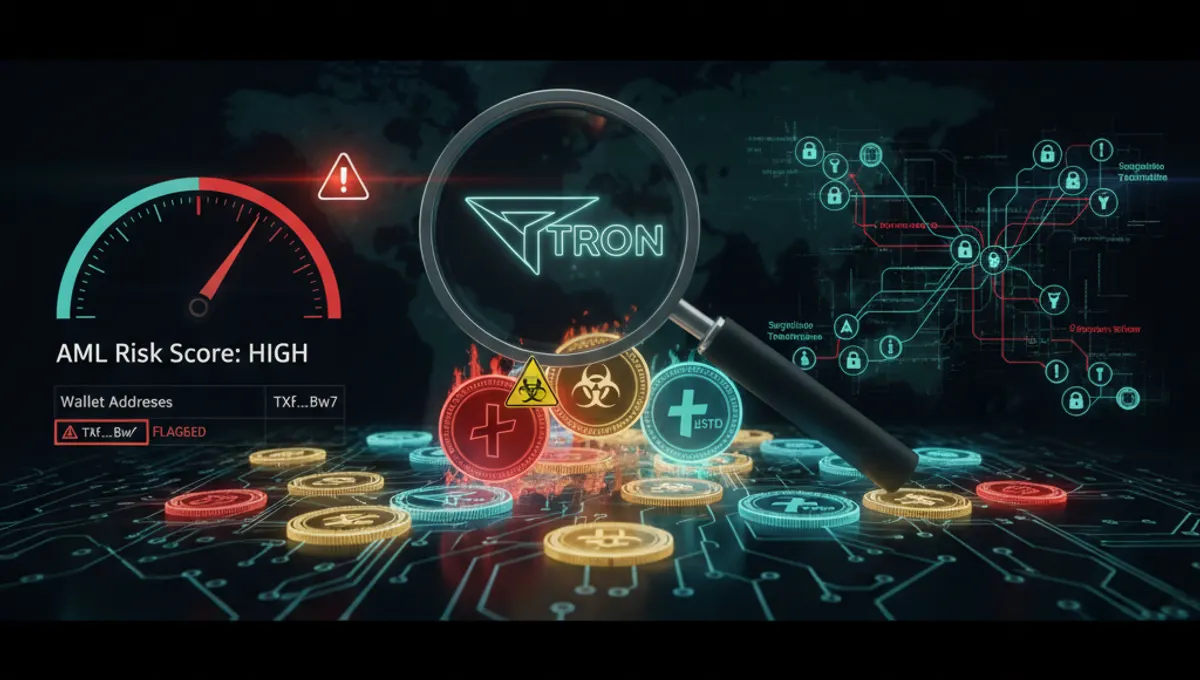
An AML risk score for a Tron address is a numerical or categorical rating (often low, medium, high, or critical) that reflects the likelihood of the wallet being involved in illicit activity or holding tainted coins. Risk scores are calculated by analyzing:
- Transaction history: frequency, size, and patterns of fund movements.
- Known associations: whether the address has interacted with mixers, darknet markets, or sanctioned entities.
- Theft reports: if the address received funds flagged as stolen in public databases.
- Sanctions lists: cross-reference against OFAC and other regulatory designations.
- Gambling and high-risk service links: involvement with unregulated platforms.
A low risk score suggests the wallet is legitimate and has no known illicit history. A medium score indicates some caution is warranted; the wallet may have minor risk indicators or limited transaction history. A high or critical score means the address shows clear signs of tainted activity and should be avoided. Acceptable risk thresholds vary by organization; exchanges typically reject high-risk addresses outright, while some businesses may accept medium-risk wallets with additional due diligence. Always align your threshold with your compliance policy and regulatory requirements.
Common Red Flags in a Tron Address Check
When you check a Tron address, watch for these warning signs:
- Mixer involvement: the address has sent or received funds through coin mixers, which obscure transaction trails and are often used to launder stolen funds.
- Darknet exposure: the wallet has transacted with known darknet marketplace addresses or services.
- Sanctioned entity links: the address is flagged on OFAC or other sanctions lists, or has received funds from sanctioned wallets.
- Theft reports: the address received funds reported stolen in public breach databases or law enforcement records.
- Rapid fund cycling: the wallet receives and immediately forwards large sums, suggesting it may be part of a money laundering scheme.
- Gambling platform links: the address has moved funds to or from unregulated gambling services.
- Scam association: the wallet is linked to known phishing, Ponzi, or fraud schemes.
A single red flag does not automatically mean the address is malicious, but multiple indicators or a high-risk score warrant rejection. If you receive funds from a flagged address, do not forward them to an exchange; contact your compliance team first. Holding tainted coins can result in frozen USDT, account bans, and regulatory scrutiny.
Checking USDT TRC20 Addresses Before Receiving Transfers
USDT on the Tron network (TRC20 standard) is one of the most commonly transferred stablecoins, making it a frequent target for compliance checks. Before accepting a USDT TRC20 transfer, verify the sender's Tron address using the same lookup process: copy the address, run it through an AML checker, and review the risk score. Pay special attention to USDT transfers because frozen USDT is a common compliance action; if an exchange detects that USDT in your account came from a high-risk source, they may freeze those coins and your account. To avoid this, establish a rule: never accept USDT from addresses with medium or high risk scores unless your compliance team explicitly approves it. Document the Tron address check results for your records. If you accidentally receive tainted USDT, do not attempt to move it to an exchange; instead, report it to your compliance officer and preserve the transaction records. Many exchanges now perform automatic AML screening on incoming USDT deposits, so flagged coins may be frozen immediately upon arrival.
Free vs. Paid Tron Address Checkers: What to Expect
Free Tron address lookup tools offer basic screening but often have limitations. Free services may provide a simple risk flag (clean or flagged) without detailed scoring, limited transaction history, or real-time updates. They are useful for quick spot-checks but may not meet regulatory compliance standards. Paid AML services, available through our curated AML Services page, typically offer comprehensive risk scoring, detailed transaction analysis, sanctions list cross-reference, darknet exposure detection, and API integration for automated screening. Paid services also provide audit trails and compliance reports, which are essential for regulated businesses. For individual users checking a single address occasionally, a free tool may suffice. For businesses handling regular transfers or managing compliance obligations, a paid service is the safer choice. Many AML providers offer tiered pricing: basic plans for occasional users, enterprise plans for high-volume screening. Start by exploring the verified services listed on our AML Services page to find one matching your volume and budget.
What to Do If a Tron Address Check Reveals High Risk
If your Tron address lookup returns a high or critical risk score, take these steps:
- Do not proceed with the transaction unless you have explicit compliance approval.
- Document the risk assessment result and timestamp for your records.
- If you are an exchange or regulated business, escalate to your compliance or legal team.
- If the address is a customer's wallet, contact them and request an explanation or alternative address.
- If you have already received funds from the flagged address, do not move them to another wallet or exchange; report the situation to your compliance officer.
- Preserve all transaction records and AML check results for potential regulatory inquiries.
- Consider blocking the address in your internal systems to prevent future transactions.
For individuals, rejecting a high-risk transfer is the simplest option. For businesses, a high-risk Tron address check may trigger enhanced due diligence (EDD), requiring additional verification of the sender's identity and source of funds. Some organizations maintain a blacklist of high-risk addresses to automate future rejections. Remember that a high risk score does not prove criminal activity, but it indicates sufficient concern to warrant caution. When in doubt, consult your compliance team before accepting funds from a flagged Tron address.
Frequently asked questions
How do I know if a Tron address is safe to receive funds from?
Run the Tron address through an AML checker to get a risk score. Look for red flags like mixer involvement, darknet exposure, or sanctions links. A low risk score and no known associations with theft or fraud indicate the address is likely safe. Always verify the address spelling before lookup to ensure accuracy.
What does a Tron address starting with T mean?
The 'T' prefix is the standard format for Tron blockchain addresses. It indicates the address is on the Tron network (not Bitcoin or Ethereum). A Tron address is a 34-character string that uniquely identifies a wallet or smart contract. The 'T' prefix helps you quickly confirm you are using the correct blockchain before sending funds.
Can I check a Tron address for free?
Yes, some free tools offer basic Tron address checks, but they typically provide limited detail. Paid AML services offer comprehensive risk scoring, transaction history, and sanctions screening. For occasional checks, free tools suffice; for business compliance, use a paid service from our verified AML Services page for full audit trails and regulatory support.
What happens if I receive USDT from a high-risk Tron address?
If you receive USDT TRC20 from a flagged address, do not move it to an exchange. Exchanges perform automatic AML screening and may freeze tainted USDT and your account. Report the situation to your compliance team and preserve transaction records. Holding or moving tainted coins can trigger regulatory action and account bans.
How long does a Tron address lookup take?
Most AML services return Tron address lookup results within seconds to a few minutes. Real-time screening is standard for reputable services. If a lookup takes longer than 5 minutes, the service may be experiencing delays; try again or contact support. Faster results do not always mean lower accuracy; prioritize comprehensive screening over speed.