What Is a Tron Crypto Address and How Does It Work
A Tron crypto address is a 34-character string starting with the letter T, generated from your private key using elliptic curve cryptography. It functions as your public wallet identifier on the Tron blockchain, similar to a bank account number. When you create a Tron wallet, the address is derived deterministically from your seed phrase or private key, meaning the same seed always produces the same address. The address is visible on the blockchain ledger, allowing anyone to see transaction history and balances associated with it, but only the holder of the private key can authorize transfers. Tron addresses can hold TRX (the native token) and TRC20 tokens, including USDT, which is why checking a Tron address before receiving funds is critical for compliance.
Why You Need to Check a Tron Address Before Receiving Funds
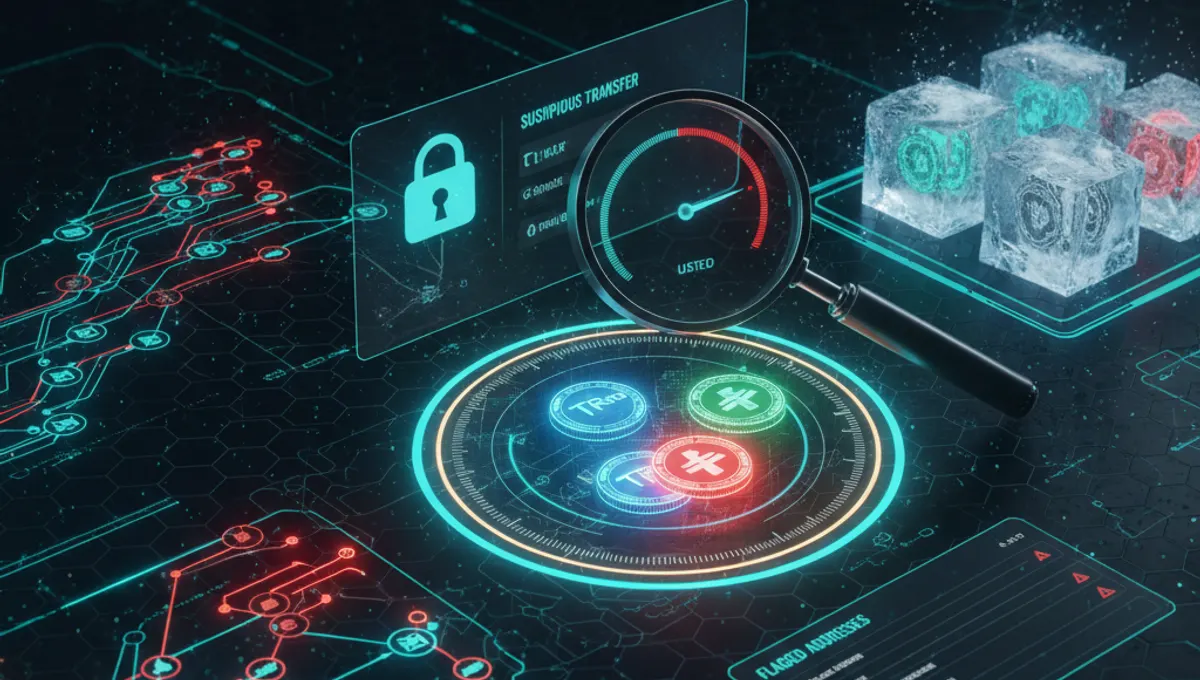
Checking a Tron address lookup before accepting a transfer protects you from receiving tainted coins—funds linked to theft, ransomware, sanctions violations, or darknet activity. If you receive coins flagged as dirty crypto, exchanges may freeze your account, delay withdrawals, or require extensive KYC documentation to unblock funds. Compliance teams at centralized exchanges monitor blockchain transactions and flag wallets with high-risk histories. A single transaction from a compromised address can contaminate your entire wallet. By performing a Tron address check in advance, you can reject risky transfers and avoid regulatory complications. This is especially important when receiving USDT on Tron, since stablecoin transfers are closely monitored by financial institutions and exchanges.
How to Check a Tron Address: Step-by-Step
To check a Tron address for AML risk, follow these steps:
- Obtain the Tron address you want to screen (it will start with T).
- Visit a blockchain explorer like Tronscan to view the address's transaction history, balance, and linked tokens.
- Review the transaction timeline: look for unusual patterns, rapid fund movements, or connections to known risky addresses.
- For deeper AML screening, use a dedicated wallet screening service from our curated AML Services list, which provides risk scoring, sanctions checks, and darknet exposure analysis.
- Evaluate the risk score returned by the service (typically 0–100, where higher scores indicate greater risk).
- If the score is below your acceptable threshold, proceed with the transfer; if it exceeds your limit, reject the transaction or request clarification from the sender.
- Document the check result for compliance records, especially if you are a business or exchange.
This process takes minutes and can prevent costly account freezes.
Understanding Tron Address Risk Scores and AML Meaning
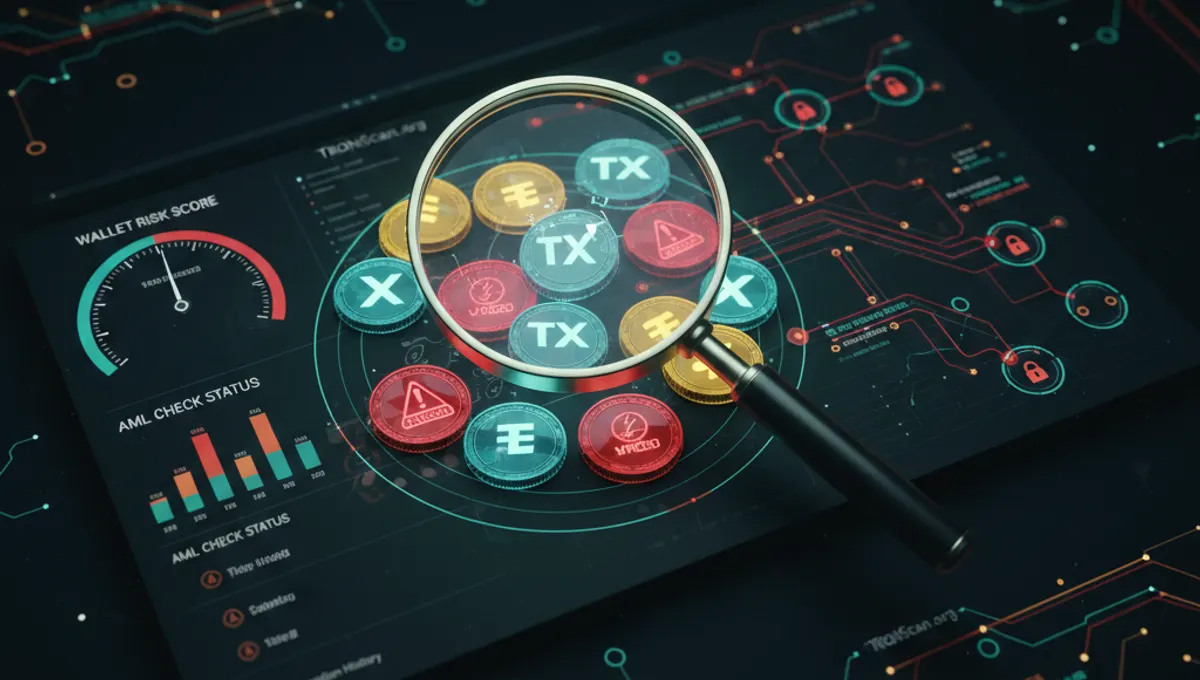
An AML risk score is a numerical rating (usually 0–100) assigned to a Tron address based on its transaction history and connections. AML stands for Anti-Money Laundering, a regulatory framework designed to prevent illicit fund movement. A risk score of 0–20 typically indicates low risk (clean, established addresses with legitimate transaction patterns). Scores of 21–50 suggest moderate risk (some exposure to high-risk services or unusual activity, but no confirmed illicit links). Scores above 50 signal elevated risk (connections to mixers, darknet markets, stolen funds, or sanctioned entities). Most exchanges and compliance teams set acceptable thresholds at 20–30, meaning they reject addresses scoring higher. The risk score is calculated by analyzing the address's entire transaction chain, including where funds originated and where they moved. Understanding this scoring helps you make informed decisions about which Tron addresses to trust.
What Risk Categories Trigger Tron Address Flags
Several risk categories can flag a Tron address as high-risk:
- Mixers and tumblers: services that obscure fund origins by combining and redistributing coins.
- Darknet market exposure: addresses linked to illegal marketplaces or their known operators.
- Stolen funds: coins traced back to hacks, theft, or fraud.
- Sanctions violations: addresses associated with individuals or entities on OFAC or other sanctions lists.
- Ransomware payments: funds received from ransomware attacks or extortion.
- Gambling and high-risk services: some compliance frameworks flag gambling platforms as elevated risk.
- Scam addresses: wallets associated with Ponzi schemes, rug pulls, or investment fraud.
- Rapid fund churning: unusual patterns of frequent transfers suggesting layering or obfuscation.
If a Tron address shows exposure to any of these categories, the risk score will increase. This does not automatically mean the current holder is guilty of wrongdoing, but it signals that the coins carry compliance risk.
How to Use Tron Address Checker Tools and Services
A Tron address checker is a tool or service that screens a wallet for AML risk in seconds. Most checkers work by querying blockchain data and comparing the address against known risk databases. To use one:
- Copy the Tron address (starting with T) you want to check.
- Paste it into the checker's search field.
- Wait for the analysis to complete (typically 5–30 seconds).
- Review the risk score, risk categories, and transaction summary.
- Check the detailed report for specific red flags or connections.
Our AML Services page lists verified, trusted checkers that provide accurate screening without requiring you to upload sensitive data. Some services offer free basic checks with limited detail, while others charge per query for comprehensive reports including transaction tracing and sanctions cross-referencing. For businesses and exchanges, paid services are recommended because they provide audit trails, API integration, and legal defensibility. For individual users, free basic checks are often sufficient to identify obviously risky addresses.
What to Do If Your Tron Address Is Flagged as High-Risk
If a Tron address you own is flagged with a high AML risk score, take these steps:
- Do not panic: a high score does not mean you committed a crime, only that the address has received or sent funds with risky characteristics.
- Review your transaction history on Tronscan to identify which transfers triggered the flag.
- If you received tainted coins unknowingly, contact the sender to request a reversal or clarification.
- Document your legitimate use of the address (e.g., personal trading, business operations).
- If you plan to deposit funds into an exchange, contact the exchange's compliance team in advance and provide documentation of your address's legitimate purpose.
- Consider moving clean funds to a new address if the flagged address is permanently compromised.
- Use a verified AML checker from our curated services list to monitor the address going forward.
Exchanges may freeze accounts linked to high-risk addresses, but many will unfreeze them after you provide evidence of legitimate ownership and use. Transparency and documentation are key.
Frequently asked questions
How do I know if a Tron address is safe to send money to
Use a Tron address checker to screen it for AML risk before sending funds. Look for a risk score below 20–30 (depending on your threshold), and verify the address has no exposure to mixers, darknet markets, or stolen funds. Check the transaction history on Tronscan to confirm it matches the sender's description. If anything seems suspicious, ask the sender to clarify or use a different address.
What does it mean if a Tron address has high AML risk
A high AML risk score means the address has received or sent funds linked to risky activities like mixers, darknet markets, sanctions violations, or stolen coins. It does not prove the current holder is guilty, but it signals compliance risk. Exchanges may freeze accounts receiving funds from high-risk addresses. You should avoid sending money to or accepting funds from flagged addresses unless you have verified the sender's legitimacy.
Can I check a Tron address for free
Yes, basic Tron address checks are available for free through blockchain explorers like Tronscan, which show transaction history and balances. For detailed AML risk scoring, sanctions checks, and darknet exposure analysis, most services charge per query or require a subscription. Our AML Services page lists both free and paid options so you can choose based on your needs.
What happens if I receive USDT on a flagged Tron address
If you receive USDT on a Tron address flagged as high-risk, the coins themselves may be considered tainted. When you try to deposit them into an exchange, the exchange's compliance system may flag the transaction and freeze your account pending investigation. You may be asked to provide proof of legitimate receipt or face delays in accessing your funds. This is why checking addresses before accepting transfers is critical.
How often should I check a Tron address for updates
Check a Tron address once before making a significant transfer. If you are a business or exchange, monitor high-value addresses regularly using automated screening tools. A single check captures the address's risk profile at that moment, but new transactions can change the risk score over time. For ongoing compliance, use a service from our AML Services list that offers continuous monitoring.